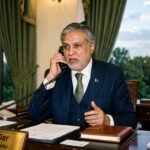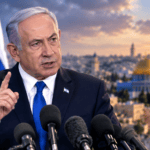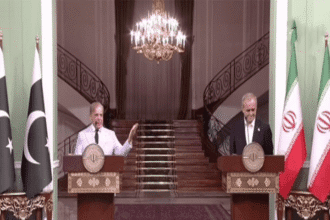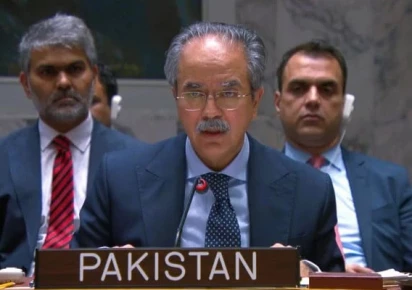
ISLAMABAD: Pakistan on Friday strongly denounced Israel’s recent airstrike on Qatar and dismissed Israeli Prime Minister Benjamin Netanyahu’s controversial remarks linking Pakistan to terrorism.
Foreign Office Spokesperson Shafqat Ali Khan said the Israeli attack was a “blatant violation of international law and the UN Charter,” warning it endangered regional peace and security. He stressed that Pakistan stands “shoulder to shoulder” with its brotherly Islamic nation Qatar.
Call for Muslim Unity
Khan urged Muslim countries to close ranks against Israel’s “provocations and aggression,” saying unity was the only way to protect regional peace. He also noted that Pakistan does not find it appropriate to engage directly with “leaders responsible for genocide,” but assured that the country is fully capable of defending itself if necessary.
Prime Minister Shehbaz Sharif has also called for an immediate end to Israeli aggression in the Middle East, underlining that Muslim solidarity is essential to counter such threats.
Netanyahu’s Remarks Rejected
The Foreign Office dismissed Netanyahu’s video statement in which he compared Israel’s strike on Qatar to the U.S. operation that killed Osama bin Laden in Pakistan in 2011. Netanyahu argued that Israel deserved praise rather than criticism, and even warned Qatar and other states of further action against Hamas leaders.
Pakistan, however, rejected his words as “unworthy of legitimization,” emphasizing that Israeli rhetoric undermines humanitarian and diplomatic efforts across the region.
Clarification on UK Ties
Separately, Khan also addressed reports suggesting Pakistan was being singled out by UK immigration policies. He clarified that no such targeting exists and that Pakistan and Britain continue to cooperate on common challenges.
The clarification followed UK Home Secretary Shabana Mahmood’s recent warning that visas could be restricted for countries unwilling to take back illegal migrants. Pakistan, India, Bangladesh, Nigeria, Iran, Iraq, and Gambia have previously been listed among “non cooperative” states.