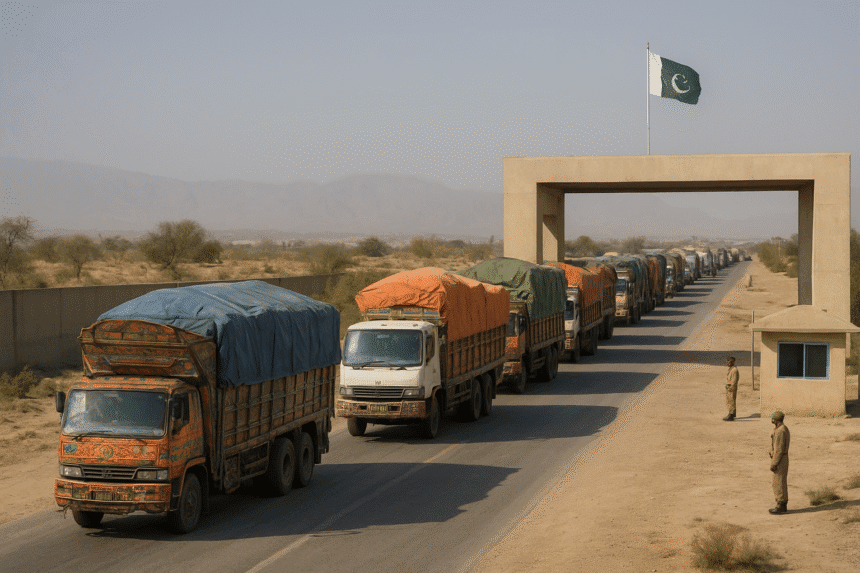
Pakistan has resumed Afghan transit trade after a 10 day suspension, following an “immediate ceasefire” agreement with the Taliban government during talks in Doha, Qatar. Trade activities have restarted on a First In, First Out (FIFO) basis to clear around 300 stranded vehicles. The process began at the Chaman border, which is the most important land trade route between the two countries. According to the Directorate of Transit Trade (Customs), the cargo clearance will take place in three phases. In the first phase, nine vehicles that were turned back when the Friendship Gate was closed will be reweighed and rescanned, with full inspections if any issues are found. The second phase includes 74 vehicles from the NLC Border Terminal Yard, while the third phase involves 217 vehicles parked in the halting yard, which will be allowed to cross into Afghanistan after checks. To ensure transparency, officials will also take and archive photographs of all returning or halted vehicles.
Officials said that the reopening of the border trade will bring relief to traders, transporters, and cargo operators who faced heavy financial losses during the closure. They added that security inspections have been further tightened to stop smuggling and illegal trade. The Chaman border handles dozens of trucks and cargo consignments every day, making it vital for cross-border economic activity. Earlier, on October 11, Pakistan had shut major border crossings including Torkham and Chaman, along with minor routes such as Kharlachi, Angoor Adda, and Ghulam Khan due to rising tensions. However, on October 19, both Pakistan and Afghanistan agreed to an immediate ceasefire and decided to continue discussions in Istanbul on October 25. Authorities now hope that the phased restoration of transit trade will help normalize trade operations and strengthen economic ties between the two neighbouring countries.