The Doha Film Festival is drawing attention this year not just for its glamour, but for two films that take audiences straight back into the shadows of the Saddam Hussein and Muammar Qadhafi eras — decades marked by fear, silence, and people quietly fighting to survive.
Two regimes, two stories — but the same weight of history
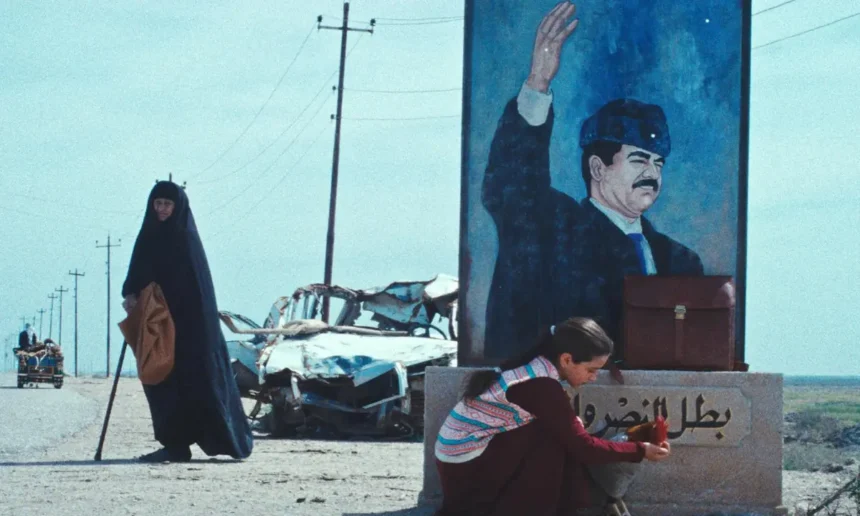
One of the standout entries is The President’s Cake, an Iraqi feature by filmmaker Hasan Hadi. The movie follows nine-year-old Lamia, an orphan growing up in Saddam’s Iraq during the 1990s. Her school forces her to bake a birthday cake for the president — a request that feels absurd in a time when even basic food items are hard to find due to crushing sanctions.
Through Lamia’s struggle, the film paints a painfully intimate picture of ordinary families trying to hold on to dignity in a world shaped by fear, scarcity, and state control.
The second film, My Father and Qadhafi, tells a very different but equally heartbreaking story. Director Jihan K recounts the disappearance of her father, a Libyan diplomat who became a critic of Qadhafi’s regime. He vanished in 1993. His body wasn’t found until almost twenty years later, after Libya’s uprising brought the dictatorship down.
The documentary pieces together her family’s long search for answers — folding personal grief into the larger, darker story of life under Qadhafi.
Why these films resonate so strongly
For many in the region, Saddam and Qadhafi aren’t just historical figures — they’re symbols of entire eras defined by repression, paranoia, and trauma. People either lived through those years or grew up hearing stories whispered at home because they couldn’t be spoken openly outside.
By putting these memories back on screen, the Doha Film Festival is doing something simple but powerful: it’s forcing a generation that didn’t witness those regimes to understand what they meant, and reminding the generations that did survive them of the stories they were never allowed to tell.
Audience reaction: painful, emotional, necessary
Festival-goers have described the films as “gut-punching,” “beautifully made,” and in some cases, “difficult to watch — but important.”
The young actress playing Lamia in The President’s Cake has been singled out for her raw and convincing performance, while critics praised the documentary for its honesty and restraint.
For many viewers, these films aren’t just cinema. They’re memory — fragile, painful, and essential.
Cinema as a bridge to understanding the past
At a time when political narratives shift quickly and history is often rewritten online, these films offer something grounding: real stories, shaped by real people living under regimes that defined their lives.
And by showcasing them, the festival reminds audiences why cinema matters — not just to entertain, but to remember.