Riyadh got a colourful dose of Pakistan this week — not through politics or speeches, but through fabrics, flavours, craftsmanship and the kind of cultural warmth you can’t really describe until you see it up close.
As part of Saudi Arabia’s Global Harmony cultural initiative, a dedicated showcase of Pakistani heritage opened in the capital, drawing families, diplomats, students and curious visitors who stopped, stared, tasted and asked questions — often with a smile.
It was one of those events where the air feels lighter, and people linger longer than they planned.
A Walk Through Pakistan — All Inside One Exhibition Hall
The moment you entered the pavilion, it felt like stepping into a familiar mix of colour and craft that defines so much of Pakistan’s identity.
Traditional Clothing That Turned Heads
Beautifully embroidered shawls, hand-woven dupattas, Sindhi mirror-work, Balochi patterns, and modern takes on the classic shalwar-kameez drew instant attention.
Visitors ran their hands over the fabrics, asked how long the embroidery takes, and took photos like they were saving something rare.
A few Saudi guests were overheard saying the same thing:
“We didn’t know Pakistani clothing had this much detail.”
Handicrafts That Tell Their Own Story
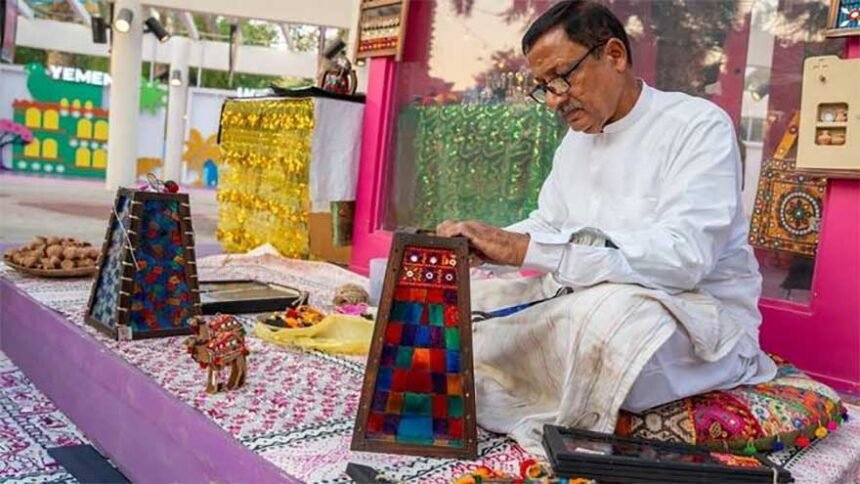
Woodwork, pottery, truck-art inspired décor, camel-bone crafts, hand-stitched purses — each piece had a story behind it.
Some artisans explained how their families had been doing the same craft for generations. Those conversations often became the real highlight for visitors — learning not just what something is, but where it comes from.
Aromas You Could Follow From Across the Hall
Then there was the food.
The smell of spices — cumin, cardamom, tikka masala — floated through the air like an open invitation.
Food stalls served bites of biryani, kababs, samosas, halwa, and chai that tasted like home for many Pakistani expatriates… and a discovery for many Saudis.
One Saudi family said they “came for the clothes but stayed for the food,” which honestly feels like the most Pakistani thing ever.
Performances, Students and a Whole Lot of Energy
The exhibition wasn’t quiet. It wasn’t meant to be.
Folk music, interactive presentations by students from the Pakistani community school in Riyadh, and short cultural demos created a lively rhythm inside the pavilion.
Kids danced, older visitors nodded along to the beats, and the stage became a small but meaningful bridge between two cultures.
A Soft-Diplomacy Moment That Actually Felt Genuine
Beyond the aesthetics, the event carried a quiet significance.
Saudi Arabia has been opening its cultural space to international communities — and Pakistanis, who make up one of the kingdom’s largest expatriate groups, finally got a spotlight that felt both earned and overdue.
For Pakistanis living in the kingdom, the event wasn’t just entertainment.
It felt like recognition.
A reminder that their culture has a place in the country they call home.
For Saudis, it was a chance to see Pakistan as more than news headlines — to experience its colours, crafts, and tastes through something joyful and human.
Why Events Like This Matter
-
They give Pakistani artisans global visibility.
-
They help younger generations of expat kids stay connected to their roots.
-
They build trust and warmth between two deeply linked nations.
-
And they let culture do what culture does best — bring people together without needing a translator.
As the evening wrapped up, stalls kept buzzing, chai kept pouring, and people kept returning for “just one more look,” proving something simple:
When culture is shared honestly, it doesn’t just showcase a country — it connects people.