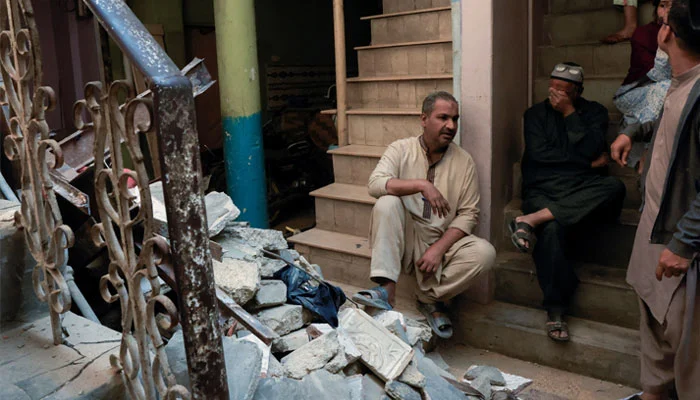
KARACHI: A pre-dawn explosion ripped through a residential building in Karachi’s Soldier Bazaar No 1 on Thursday, killing at least 16 people and injuring 13 others, as families were reportedly awake preparing for Sehri.
The blast occurred in the congested katchi abadi of Gul-e-Rana, reducing a multi-storey structure to rubble within seconds and sending shockwaves through the tightly packed neighbourhood. Narrow lanes — some barely wide enough for one person to pass — quickly filled with dust, debris and frantic cries for help.
The building stood on a 30–35 square yard plot and comprised a ground floor plus two additional storeys, with another family living on the rooftop. Each level consisted of a single room, typical of the area’s cramped and unregulated construction.
Rescue teams struggled to reach the site through suffocating alleys as relatives clawed at broken concrete with bare hands. Survivors and neighbours called out the names of loved ones trapped beneath collapsed slabs. Entire families were buried under the debris.
One resident tearfully recounted that her aunt and two young children were among those caught in the blast, while the woman’s husband sustained critical burn injuries.
Initial investigations suggest the explosion was likely caused by a gas leak — a long-standing concern in the locality. Residents say the area has endured chronic gas shortages and extended load-shedding for years, at times going days without supply.
To cope, many households rely on gas cylinders or install suction pumps to draw gas into their homes during low-pressure periods. Locals claim that when supply resumes after outages, it often returns at extremely high pressure.
“The pressure is never stable,” said a resident, Rajab Ali. “Either there is no gas at all, or when it comes, it comes like a storm.”
According to residents, such sudden surges heighten the risk of leakage, particularly in homes with substandard piping. During a post-blast inspection, officials from the Bomb Disposal Squad reportedly found plastic pipes connected with multiple joints inside the affected house, along with gas suction motors. Gas was still leaking from the system.
Bomb disposal expert Abid Farooq said preliminary observations indicate that there had been no gas supply for several days before it resumed suddenly at high pressure late Wednesday night. He suggested that a leak may have filled the house with gas, and when the family woke up for Sehri and lit the stove, the ignition could have triggered the explosion.
He added that poor electrical wiring inside the house may also have played a role. If gas had accumulated and electricity was restored, a short circuit could likewise have sparked the blast. However, he clarified that it was not a cylinder explosion, noting that most such incidents in Karachi stem from gas leakages.
Residents further alleged that fluctuating gas pressure has long plagued the area, even affecting their utility bills. One local claimed that although a new gas line was installed after the old one was removed years ago, supply remained inconsistent until it suddenly resumed the night of the tragedy.
Poor ventilation, overcrowded housing and closely built structures magnified the devastation. Several adjacent buildings reportedly developed cracks, while some vacant houses sustained structural damage.
The incident has reignited concerns over regulatory oversight, infrastructure maintenance and the safe distribution of gas in densely populated urban settlements. As grief grips the community, frustration is also mounting over what residents describe as administrative negligence.
Officials have yet to release a final technical report. For the families of Gul-e-Rana, however, the loss is already profound — a stark reminder of the risks faced daily in underserved neighbourhoods where fragile infrastructure can turn routine moments into fatal disasters.