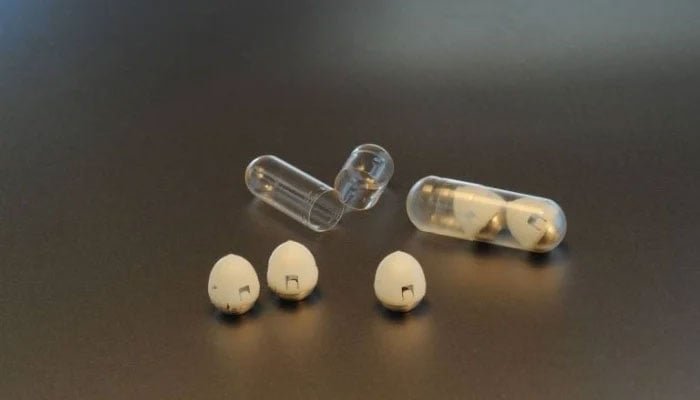
In a significant development, scientists have claimed to have developed an oral insulin system that could free diabetes patients from daily injections.
This new technology protects insulin from breaking down in the digestive system and helps it to be effectively absorbed into the bloodstream, raising hopes for easier diabetes treatment.
For more than a century, experts have been trying to deliver insulin in pill form.
Normally, enzymes in the digestive system break down insulin before it can become effective, while there is also no natural mechanism in the intestines to absorb it into the bloodstream.
Researchers at Kumamoto University in Japan have presented a possible solution to this problem.
They used a special type of cyclic peptide, called “DNP peptide,” which has the ability to pass through the small intestine and enter the bloodstream.
During the study, two methods were tested: in one, insulin was combined with the peptide, while in the other, both were chemically linked. Both methods resulted in reduced blood sugar levels in diabetic mice.
Importantly, this new system achieved approximately 33 to 41 percent bioavailability, which is a significant advancement compared to traditional injections, while previous oral insulin attempts required higher doses.
This improvement is considered a major step toward making insulin in pill form practically usable.
Although these results are still at an early stage and have been published in the journal Molecular Pharmaceutics, they are being regarded as a promising development toward easier and more effective diabetes treatment.
Before testing on humans, this method is currently being further evaluated on larger models.