ISLAMABAD/MAKKAH: For Pakistani pilgrims preparing for Hajj, packing for Mina is not the same as packing for the whole journey. Mina is short, crowded, physically demanding — and, honestly, it can test a pilgrim’s patience as much as their stamina.
With Pakistan’s Hajj 2026 preparations already under way and official advisories continuing through the Ministry of Religious Affairs, pilgrims are being urged to keep their Mina bags light, practical and compliant with Saudi regulations. The Saudi Nusuk platform says Hajj services generally include accommodation, catering, transport, Mashair services, guidance and visa arrangements. That means pilgrims don’t need to carry half their suitcase to Mina. They need the right things.
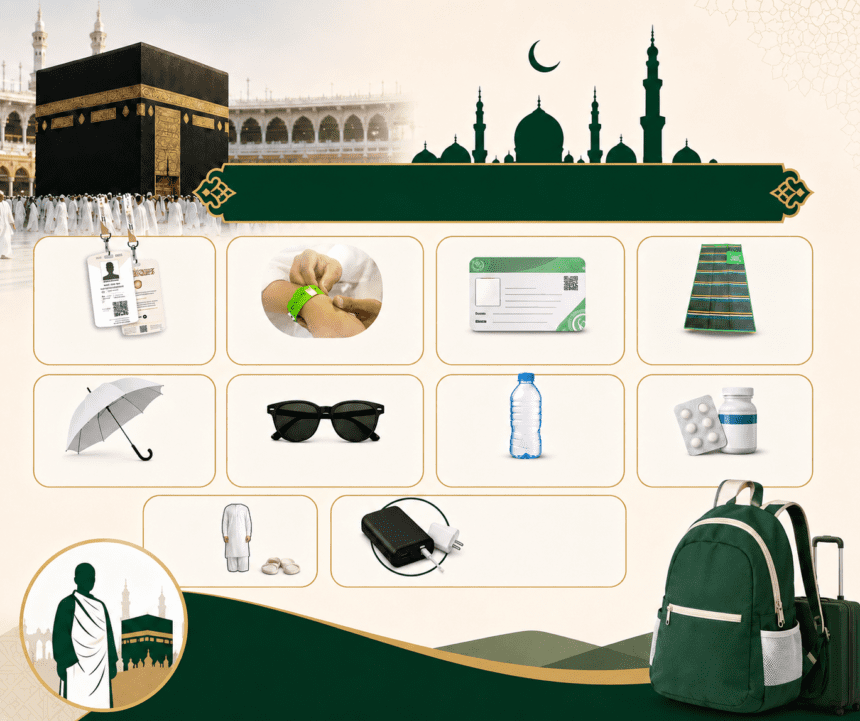
The Nusuk Card should be the first item in the bag — and ideally around the neck or safely inside an accessible pouch. Saudi authorities describe the Nusuk Card as an identification card that enables pilgrims to enter the holy sites and access Hajj services. Pakistani pilgrims should also keep copies of their passport, visa, Hajj permit, hotel card, group details and emergency contact numbers. A small waterproof pouch can save a lot of trouble during movement between Mina, Arafat and Muzdalifah.
Pilgrims with diabetes, blood pressure, heart conditions, asthma or other medical needs should carry enough prescribed medicine for the Mashair days, plus a small extra supply. Medicines should be clearly labelled and, where possible, kept in their original packaging. A basic first-aid pouch with plasters, blister pads, oral rehydration salts, antiseptic wipes and doctor-approved pain relief can also be useful. This isn’t overpacking. It’s just sensible.
Hydration is another major concern. Pilgrims often spend long hours outdoors and may walk significant distances during the Hajj rituals, sometimes in intense heat. A refillable water bottle and a few electrolyte sachets should be kept in the Mina bag. Pilgrims should drink water regularly rather than waiting until they feel thirsty.
Comfortable footwear is equally important. New shoes are a bad idea. Really bad. Pilgrims should take comfortable, already-used slippers or sandals that are easy to remove and suitable for walking. Blisters can make even a short walk painful, and during Hajj, there are rarely truly short walks.
Men should keep spare ihram items if needed, while women should carry light, modest and breathable clothing suitable for heat and crowded conditions. Extra undergarments, socks where appropriate, and a small towel can be packed without making the bag too heavy. The rule is simple: carry what you’ll actually use. Anything extra becomes weight on your shoulder.
Unscented hygiene items are also essential. Pilgrims should pack unscented soap, tissues, wet wipes, a small hand sanitiser, toothbrush, toothpaste and a compact towel. Because of ihram restrictions, scented products should be avoided by those in the state of ihram. Crowded conditions also make basic hygiene more important, especially during long stays in shared spaces.
A small prayer mat, pocket Quran or dua booklet, tasbeeh counter and a list of personal duas can help pilgrims stay focused during Mina days. Many Pakistani pilgrims prefer keeping duas written in Urdu for easier reading. Still, the bag should remain compact. Mina is not the place for heavy books.
A charged power bank is another item that should not be forgotten. Phones are used for group coordination, maps, emergency contact, official messages and staying in touch with family back home. Pilgrims should save important contacts in both English and Urdu, take screenshots of hotel and group details, and use battery-saving mode during long rituals.
Instead of a large backpack, pilgrims should use a lightweight crossbody or drawstring bag. It should be big enough for documents, medicine, water, hygiene items and a charger, but small enough to carry easily while walking or sitting in crowded tents. Valuables, unnecessary cash, expensive jewellery and bulky items should be left out.
Heat protection is also necessary. A light umbrella, sunglasses, cooling towel or small spray bottle can help pilgrims manage high temperatures. Pilgrims should use shade whenever possible and avoid unnecessary exposure during peak heat.
Pakistani pilgrims should also be careful about what not to pack. Narcotics, banned medicines, sharp tools, heavy food supplies, large suitcases and items handed over by strangers should be avoided. Authorities have repeatedly warned travellers to be cautious about prohibited substances and luggage contents, and Hajj pilgrims should take that advice seriously.
For Pakistani pilgrims, the best Mina bag is not the heaviest one. It is the one that helps them move easily, stay healthy and focus on worship.
Hajj is physically demanding, emotionally intense and deeply spiritual. A well-packed Mina bag won’t remove every hardship — Hajj was never meant to be effortless — but it can prevent avoidable stress. And during those sacred days, even one less worry matters.