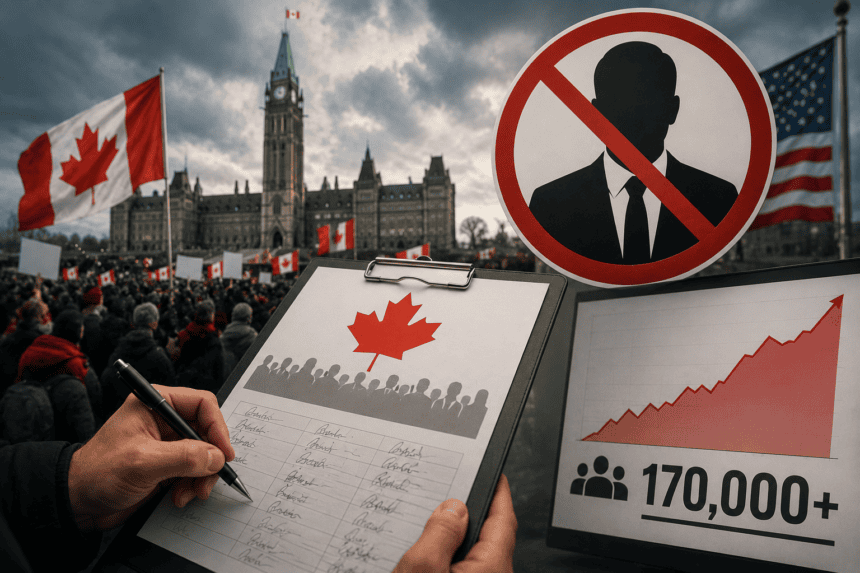
A petition calling for the expulsion of David Cohen, the United States ambassador to Canada, has surpassed 170,000 signatures, marking a rare and sharp public rebuke of a top American diplomat.
The petition, hosted on the official House of Commons website, accuses Cohen of “interfering” in Canadian domestic affairs. While the document lacks a singular, specific catalyst, it arrives during a period of heightened sensitivity regarding foreign influence in Ottawa. The sheer volume of signatures has forced the issue into the spotlight, moving it from fringe online discourse to a matter now requiring a formal government response.
Critics behind the campaign point to Cohen’s public comments on Canadian political issues—ranging from trade policy to internal security briefings—as overstepping the traditional boundaries of diplomatic conduct. Supporters of the movement argue that an ambassador’s role is to bridge gaps, not to lecture the host government on its own legislative processes or national security priorities.
The Liberal government is now bound by parliamentary rules to provide a formal written response to the petition. This puts Prime Minister Justin Trudeau’s administration in a delicate spot. Backing the ambassador is the standard diplomatic play, yet dismissing a petition with this level of public backing risks alienating voters who are increasingly vocal about perceived foreign overreach.
The U.S. Embassy in Ottawa has declined to comment on the petition directly. Insiders suggest the State Department views the move as a byproduct of a polarized political climate rather than a reflection of official Canadian government policy.
Diplomatic norms dictate that ambassadors maintain a neutral stance, but in the modern era, the line between “sharing policy perspectives” and “meddling” has blurred. Cohen, a high-profile political appointee by President Joe Biden, has never been one to shy away from the media, a trait that has served him well in some circles but has clearly grated on others.
Whether the petition leads to any tangible diplomatic shift remains unlikely. Ambassadors are rarely expelled over public pressure campaigns. However, the success of this petition serves as a warning shot: the Canadian public is watching, and for the first time in years, the U.S. ambassador is no longer operating in the shadows of quiet diplomacy.