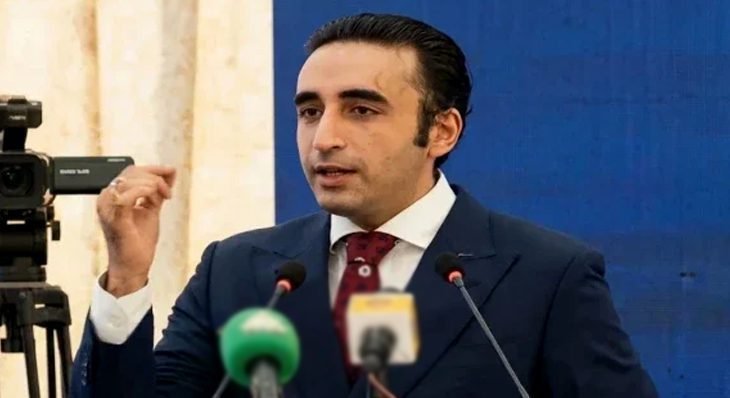
KARACHI: The Pakistan Peoples Party (PPP) has opposed any attempt to divide Sindh through force, warning that such a move could trigger violence and deepen divisions among communities across the province.
Speaking at a Meet the Press event at the Karachi Press Club on Tuesday, PPP Chairman Bilawal Bhutto Zardari said new provinces should only be created through constitutional, democratic and legal procedures based on the wishes of the people.
He warned that forcibly dividing Sindh could turn communities against one another and lead to bloodshed in Karachi and other parts of the province.
Bilawal clarified that the PPP was not against the creation of new provinces but would resist any attempt to impose such changes without public consent. He also questioned proposals for a referendum, arguing that the Constitution already provides a procedure for establishing new provinces.
He said the Sindh Assembly had repeatedly expressed its position against dividing the province and criticised discussions taking place without consultation with provincial representatives.
Calls for political reset
Moving beyond the provinces issue, the PPP chairman called for a political reset to restore public confidence in state institutions, saying the process should begin in Parliament through dialogue and consensus.
He urged the government to end political victimisation and improve relations with the opposition, particularly the Pakistan Tehreek-e-Insaf (PTI).
Bilawal described jailed former prime minister Imran Khan as a political prisoner and said he wanted to see an end to the practice of former prime ministers being imprisoned after leaving office.
He also criticised the passage of the 27th Constitutional Amendment, alleging that it was approved through a forced majority rather than political consensus.
Government defends debate on new provinces
Responding to the remarks, Information Minister Attaullah Tarar said discussions about creating new provinces should continue, describing a referendum as a constitutional means of seeking public opinion.
Bilawal also raised concerns about the distribution of financial resources between the federation and provinces, arguing that provincial governments must receive their due share to improve public services and infrastructure.
He stressed that political parties should focus on public concerns, including inflation, unemployment and poverty, rather than allowing political divisions to dominate national affairs.