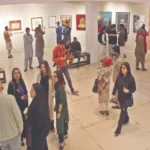
Cairo — On a cool Egyptian night, something unexpected happened: the heartbeat of South Asian Qawwali rolled through Cairo’s historic courtyards, and the city — centuries old, endlessly layered — responded with warmth, wonder and a kind of spiritual stillness that’s hard to describe.
The occasion was the 18th SAMAA International Festival for Chanting and Spiritual Music, and Pakistan’s Badr Ali–Bahadur Ali Qawwal Group stepped onto the stage as honorary guests. Within minutes, the space felt transformed — harmoniums rising, tablas thundering lightly, and voices weaving devotion into the Cairo air.
For many in the audience, it was their first encounter with Qawwali. They didn’t know the language, but they understood the feeling.
A Musical Bridge Between Two Histories
What made the night special wasn’t just the music — though that alone could have carried the entire event. It was the way Qawwali created a bridge between two ancient cultures.
Egypt has its own traditions of devotional chanting; Pakistan has Qawwali, rooted in Sufi heritage stretching back hundreds of years. And for a moment, the two met perfectly — like a conversation between old friends who somehow never met before.
Organizers said Pakistan’s inclusion this year was intentional. They wanted the festival to reflect “a wider spiritual map,” one where different faiths and musical traditions could sit side by side without competing, without performing superiority — just sharing breath and sound.
A Festival Built on Unity, Not Performance
The theme this year, “Here We Pray Together,” filled the evening with meaning much deeper than applause. SAMAA Festival has always been more than a cultural event; it’s a kind of spiritual gathering disguised as a concert. A place where artists from different religions and backgrounds chant, sing and recite not to impress but to connect.
Qawwali fit right in.
When the group launched into their opening numbers, the courtyard grew quiet — not the polite kind, but the kind that happens when a room full of strangers falls into the same emotional rhythm. And when the crescendo hit, the applause was immediate, unforced, almost grateful.
Why This Matters — Qawwali on a Global Stage
Qawwali has travelled far in the last century, from shrines and intimate mehfils to world festivals and global music circuits. But seeing it performed in Cairo — a city that knows the weight of history — gives the tradition a renewed sense of place.
It reinforces something we often forget:
Devotional music, no matter where it comes from, speaks a language beyond geography and belief.
People don’t need to understand every word. They only need to feel the sincerity behind it.
And Cairo felt it.
What the Night Leaves Behind
A few things linger from that evening — the kind that stay with you long after the last note fades:
-
Egyptians discovering the emotional depth of South Asian Qawwali for the first time
-
Pakistani artists finding a second home on an unexpected international stage
-
A festival proving that spiritual sound can cross borders faster than politics ever will
-
A reminder that even in a divided world, a shared melody still has the power to soften something inside us
Cairo didn’t just hear Qawwali — it absorbed it.
And for one night, the city resonated with the soulful echo of devotion, carried all the way from Pakistan.