

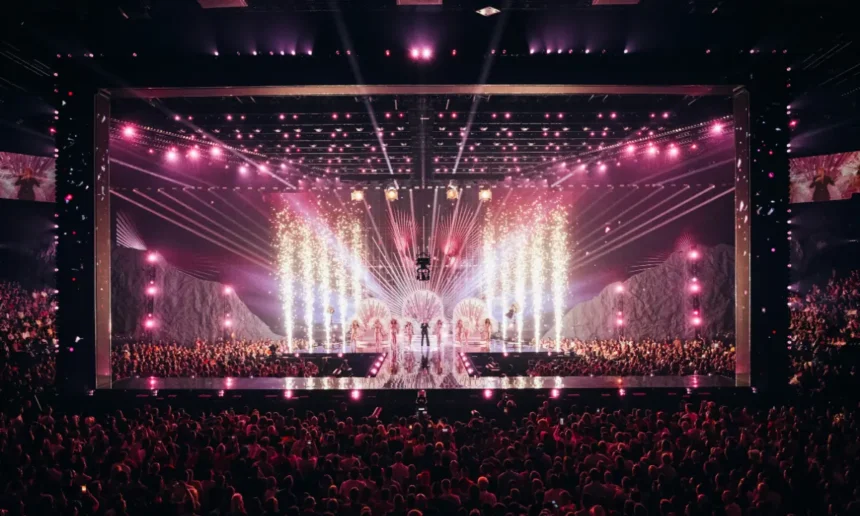
What was supposed to be a routine announcement turned into one of the most dramatic shifts in Eurovision’s recent history. Moments after the European Broadcasting Union confirmed that Israel would be allowed to participate in the 2026 contest, four countries — The Netherlands, Spain, Ireland and Slovenia — said they would not be taking part at all.
It was a coordinated exit without being formally coordinated: each broadcaster released its own statement, but the message was unmistakably aligned. The humanitarian crisis in Gaza, they argued, made Israel’s inclusion impossible to stand behind.
A breaking point years in the making
For months, several national broadcasters had hinted at discomfort with the idea of competing alongside Israel while the war continued. There were long-standing complaints as well — allegations of political influence, questions about voting integrity, and doubts about whether Eurovision could still claim neutrality.
This time, the unease snapped into action.
Ireland’s RTÉ said the contest could not “separate entertainment from a devastating conflict.” Spain’s RTVE echoed concerns about human-rights violations. Dutch broadcaster AVROTROS went a step further, arguing that trust in the fairness of the competition had eroded.
Slovenia joined them — the smallest of the four, but symbolically important because smaller broadcasters rarely take such high-stakes positions.
Eurovision moves on, but the fracture is impossible to ignore
Despite the walkouts, Eurovision 2026 will proceed in Vienna. The hosts insist the show will remain intact, even if the budget and scale need adjustments. But the absence of four long-standing participants marks one of the most serious ruptures the contest has ever seen.
Eurovision has weathered political storms before, but rarely has dissent moved from murmurs to a full boycott.
This is different. This is a cultural institution being pulled into a geopolitical fault line it has long tried to dance around.
Can Eurovision stay apolitical? Perhaps that question no longer applies
The contest’s core identity — “music transcends politics” — is being tested harder than at any time in its seven-decade history.
To some countries, allowing Israel to perform in 2026 feels like complicity. To the EBU, excluding Israel would violate its own rules on participation.
Caught in the middle is a global audience that loves Eurovision for its spectacle, its chaos, its unity — but may now have to reckon with the fact that even a song contest cannot outrun world events.
One thing is clear: Eurovision 2026 will look and feel different, not because of the music, but because of who isn’t standing on the stage.