

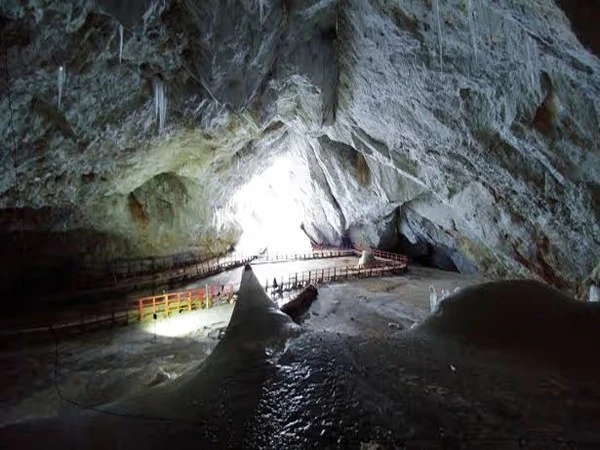
Scientists have discovered bacteria in an ancient underground ice cave that are resistant to 10 modern antibiotics currently in use.
Ice caves are home to various types of microorganisms. If the ice present in these caves melts, these microbes could emerge and further worsen the growing global crisis of antibiotic resistance.
However, researchers say that these same microbes may also help develop new strategies to tackle the problem. The excessive use of antibiotics has made them less effective, causing the risk of resistance to rise rapidly.
The bacterium Psychrobacter SC65A.3, found in a 5,000 year old layer of ice in a cave in Romania, is an organism adapted to cold environments and can cause infections in animals and humans.
According to experts, such bacteria are both a threat and a source of hope.
According to the study author Dr Cristina Purcarea, a senior scientist at the Institute of Biology Bucharest, Romanian Academy, if melting ice releases these microbes, their resistance genes could be transferred to modern bacteria, further intensifying the global antibiotic resistance crisis.