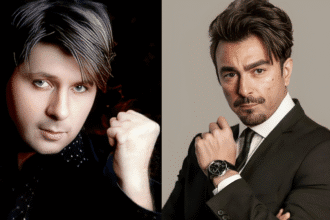


Pakistani rapper Talha Anjum, one half of the iconic hip-hop duo Young Stunners, has responded to ongoing criticism that his music glorifies alcohol and violence — saying that people have misunderstood the intent behind his words.
During a recent Townhall-style interview streamed on Raftar’s YouTube channel, Anjum took a direct question from a young fan who asked whether his lyrics might be normalizing behaviors like drinking or aggression among listeners. The fan specifically mentioned the recurring references to sharab (alcohol) in his songs — something critics have often pointed to as a negative influence on younger fans.
Anjum didn’t dodge the question. Instead, he leaned in with clarity.
“I’ve talked about these things, yes — but I’ve never promoted them,” he said. “I’m not saying I do it, or that I love doing it. I’m not glorifying it.”
He went on to draw a distinction between mentioning a theme and endorsing it, explaining that art often reflects reality — even the darker parts of it — without celebrating it. “If I write about pain or loss or alcohol, it doesn’t mean I’m encouraging it. It means I’m expressing a feeling,” he said.
Addressing the issue of violence, Anjum was equally firm.
“There’s not a single song where I’ve ever preached violence,” he clarified, adding that any aggression in his lyrics is metaphorical or reflective of urban struggle, not an invitation to imitate it.
He also acknowledged that his public image carries weight among fans — something he’s aware of but doesn’t believe makes him responsible for every interpretation of his work. “I would want people to copy me,” he admitted, “but not in these things.”
Interestingly, Anjum referenced Urdu’s classical literary tradition, pointing out that even poets like Mirza Ghalib used imagery related to wine and intoxication — yet their work is remembered for its emotional depth, not moral controversy. “Context matters,” he said. “Sometimes people hear one line and make assumptions.”
As for profanity, the rapper didn’t completely deny it but said it’s part of everyday speech in Karachi’s street culture — a reflection of real life, not an artistic endorsement.
In the end, Anjum’s message was clear: his lyrics aren’t meant to encourage reckless behavior, but to mirror the realities and contradictions of the world he grew up in. “It’s art,” he said simply. “And art isn’t always clean — but that doesn’t make it wrong.”