The Weather Department has sounded an alert over a significant rise in smog levels expected to blanket Pakistan’s major cities in the coming days.
Pakistan’s meteorological authority has issued a warning that smog levels are expected to rise sharply in the coming days across many of the country’s major urban centres. The alert cites a combination of stagnant weather conditions and persistent pollution as key drivers
The forecasting body notes that dry, calm weather—typical of the late-November to mid-December period—is already prevailing, and this is creating the perfect conditions for smog formation and accumulation.
With weak winds and lower temperatures inhibiting the dispersion of airborne pollutants, cities in the eastern Punjab region—such as Lahore, Gujranwala, Sheikhupura, Kasur, Nankana Sahib, Faisalabad, Multan, Bahawalpur, Rahim Yar Khan, Bahawalnagar and Khanpur—are particularly at risk.
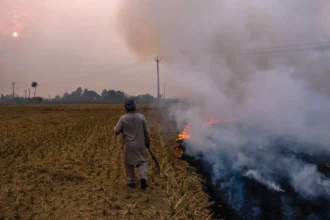
Contributing factors include industrial emissions, vehicular exhaust and burning of crop residue, which combined with meteorological conditions create a heavy smog layer.
Public health threats: The spike in smog may lead to more cases of respiratory illness, aggravated asthma and other pulmonary conditions—especially among children, the elderly and those with pre-existing health problems.
Reduced visibility: With thick smog likely to linger, road visibility could decline significantly, increasing the risk of traffic accidents and disrupting outdoor activities.
Experts say the smog situation may worsen until active weather changes—such as wind shifts or rain—help clear the air.
Authorities are expected to issue further advisories and may urge people to minimise time outdoors, especially on days when air quality markers cross hazardous thresholds.
The public is advised to keep informed about air quality index (AQI) updates and adjust travel or outdoor plans accordingly
Smog—a mix of smoke and fog—tends to be most severe during the transition into winter when cooler nights, stable air layers and emission sources coincide. The current early onset of calm, dry conditions suggests an earlier-than-usual build-up of pollution in several regions.