

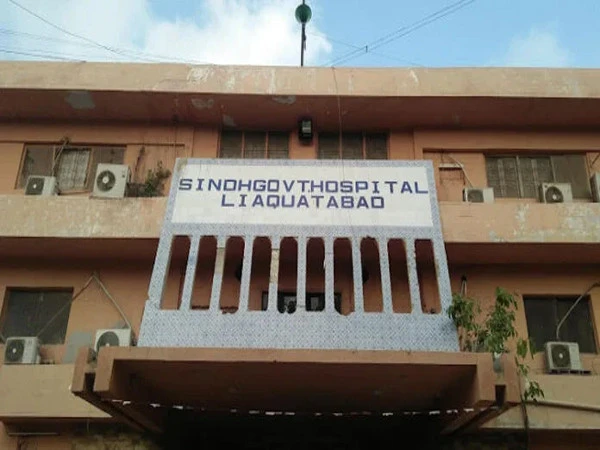
District hospitals operating under the provincial health department are facing multiple issues and incomplete medical facilities. Even after 70 years, the basic infrastructure of primary and secondary hospitals in Sindh could not be completed, and trauma centers for treating victims of various accidents have not been established in Karachi’s district hospitals.
Trauma centers were to be established at Sindh Government Liaquatabad Hospital and Saudabad Hospital, but to this day, no trauma center has been built at either facility. Hundreds of posts in Karachi’s district hospitals are still vacant. Despite more than half a century passing, these hospitals have not seen any significant improvement.
In 2000, Sindh’s former caretaker health minister, Professor S.M. Rabb, issued a notification affiliating four district hospitals in Karachi with Dow Medical College, granting them the status of teaching hospitals. However, the notification has not been implemented to date. It stated that Dow Medical College faculty would visit the district hospitals to provide medical services to patients.
Granting these hospitals teaching status would allow senior professors to offer medical services to patients, but this has not happened. As a result, district hospitals still provide only basic routine tests and primary treatment, even though the Sindh government allocates an annual budget for medicines. Facilities such as MRI, CT scan, PET-CT, color Doppler, and various other procedural tests remain unavailable. This is why patients turn to Civil Hospital and Jinnah Hospital for diagnosis and treatment, where there is already heavy pressure from across the province. Civil Hospital’s OPD alone receives 5,000 to 6,000 patients daily, while Jinnah Hospital sees similar numbers.
District hospitals in Karachi currently include Sindh Government New Karachi Hospital, Sindh Government Liaquatabad Hospital, Sindh Government Korangi Hospital, Sindh Government Saudabad Hospital, and Sindh Government Ibrahim Hyderi Hospital. Other health centers, maternity homes, and rural health facilities in Karachi’s suburban areas also lack these essential services.
The absence of these facilities in district hospitals and basic health centers not only delays timely diagnosis for patients but also contributes to overwhelming pressure on major government hospitals. Along with the lack of adequate radiology facilities, trained technicians are also in short supply.
Dr. Ali Murtaza, MS of Sindh Government New Karachi Hospital, said the hospital has 200 beds for patients but lacks CT scan and MRI facilities. The health department provides more than Rs 120 million annually for medicines. The hospital provides all possible basic facilities to visiting patients, while those with complex conditions are referred to Civil or Jinnah Hospital.
Dr. Atiq Qureshi, MS of Sindh Government Liaquatabad Hospital, said the hospital’s CT scan machine has been out of order for the past five years. The health department has been informed multiple times, but the machine remains non functional.
It is notable that at Sindh Government Korangi Hospital, the CT scan machine remains out of order for around 20 days each month, causing significant difficulty for patients in the Korangi area.
A patient, Javed, said that when he needed a CT scan and went to Korangi Hospital, he was told the machine was out of order. He returned a week later, and the machine was still not working. He then went to Jinnah Hospital, where he received an appointment for one month later.
Javed urged the health department to ensure the availability of CT scan machines in district hospitals.