
Skin cancer is a common but serious disease in which skin cells begin to grow uncontrollably, and if not treated in time, it can prove life threatening.
Types and identification of skin cancer:
1. Basal Cell Carcinoma:
This is the most common type and usually develops in the lowest layer of the skin cells. In this condition, the cells grow in the form of small bumps or pimple like spots on the upper part of the skin. It is often not fatal, but if diagnosed late, it can leave permanent marks, blisters or wounds on the skin.
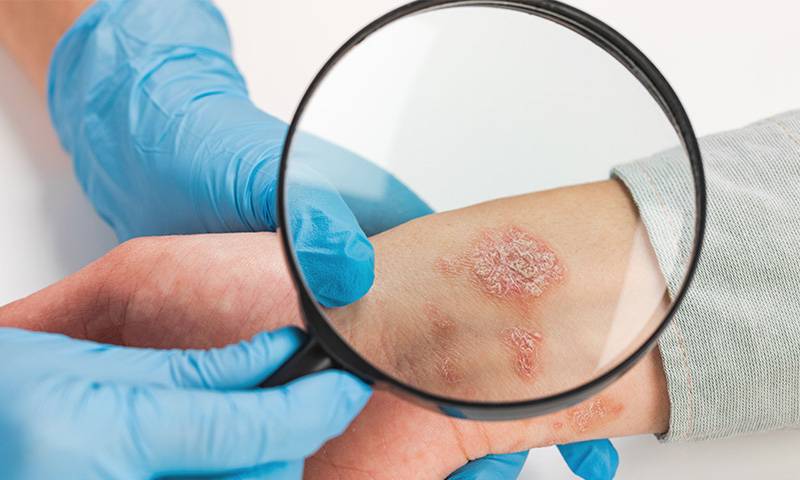
Identification method: a bump or wound that grows slowly, has shiny or translucent edges, and may sometimes bleed.
2. Squamous Cell Carcinoma:
This develops in the upper layer of the skin cells and can affect hard or thick layers of the skin. It can grow rapidly and may spread to other parts of the body. It often appears as rough, hard bumps or blisters that can easily become wounds or bleed.
Identification method: bumps or wounds raised from the skin surface, feeling hard, with frequent itching or bleeding.
3. Melanoma:
This is the most dangerous type and develops in the pigment producing cells of the skin (melanocytes). It is the type of skin cancer that can rapidly spread to other organs. It often begins in a new or pre existing mole and its color may be unusual, patchy or irregular.
Identification method: a mole or spot whose color, shape or size changes, edges become irregular, itching or bleeding begins, or new spots appear on the skin.
Early symptoms of skin cancer:
. A new bump or spot on the skin that changes color, shape or texture
. Increase in the size of a bump or spot
. Irregular edges of a bump or unclear borders of a spot
. Itching, bleeding or dryness from a bump or wound
. A wound or blister that does not heal for more than three weeks
Risks and contributing factors:
. Prolonged or constant exposure to harmful rays of the sun
. Use of tanning beds or artificial sunlight
. Repeated severe sunburn
. Fair skin, light eyes or freckles
. Family history of skin cancer
. Weak immune system
According to health experts, preventive measures, regular skin examinations and timely consultation with a doctor help in keeping the skin protected.