
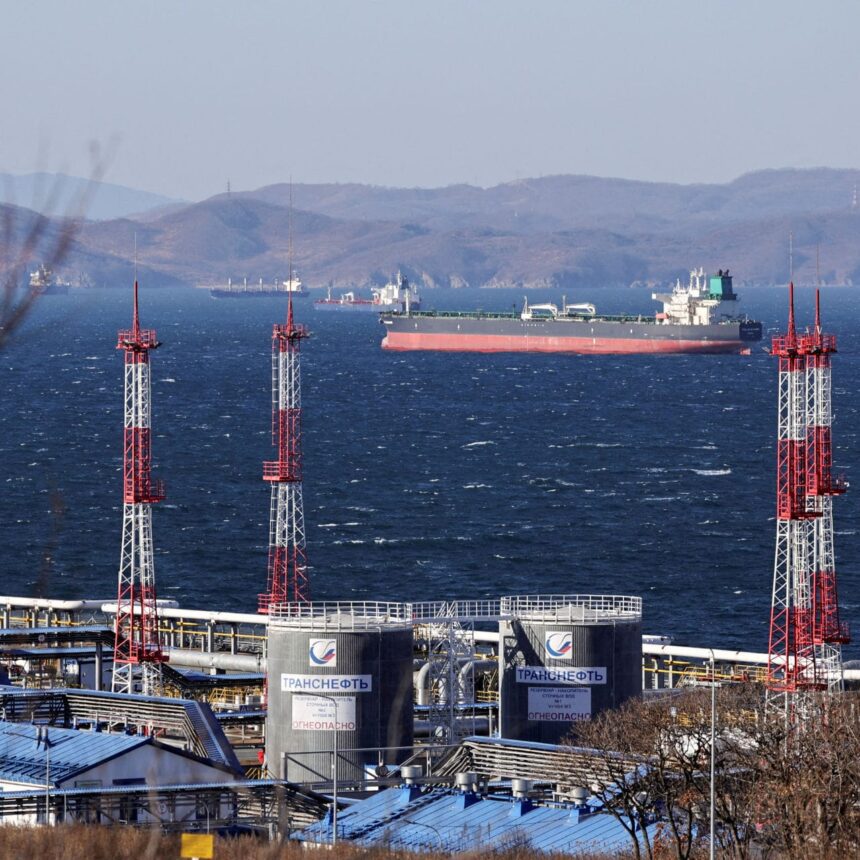
LONDON The United Kingdom has launched a sweeping new sanctions package against Russia’s top oil giants and its so-called “shadow fleet” of tankers, aiming to cripple President Vladimir Putin’s financial lifeline for the ongoing war in Ukraine.
The sanctions, announced by Chancellor Rachel Reeves, target major Russian energy firms Rosneft and Lukoil, alongside 44 oil tankers that secretly transport Russian crude across global markets. The move also extends to foreign entities including India’s Nayara Energy Limited and four Chinese oil terminals accused of facilitating Russia’s oil exports.
“We are sending a clear message: Russian oil has no place on the global market,” Reeves said before meeting global finance ministers in Washington DC. “This action tightens pressure on Russia’s war economy and those who enable it.”
Rosneft, responsible for nearly half of Russia’s oil output roughly 6% of global supply and Lukoil collectively export over 3 million barrels per day. Britain says these sanctions will have a “significant economic impact,” weakening Moscow’s ability to sustain military operations in Ukraine.
The UK Treasury revealed that Nayara Energy, partially owned by Rosneft, imported over 100 million barrels of Russian crude worth $5 billion in 2024 alone. Reeves warned that companies “turning a blind eye” to Russia’s actions will face equal scrutiny.
Foreign Secretary Yvette Cooper added that the move was “a step towards lasting peace in Ukraine and a safer United Kingdom.”
However, Moscow reacted sharply. The Russian Embassy in London condemned the sanctions, warning they would “destabilize global energy markets” and raise prices for families and businesses worldwide. A spokesperson said the decision “damages energy security for developing nations and deepens global tensions.”
The announcement coincides with discussions among G7 nations on how to seize profits from frozen Russian assets held in European banks since the 2022 invasion. The European Union which holds most of these funds is now exploring legal ways to redirect them toward Ukraine’s reconstruction efforts.
Earlier this year, Britain joined the United States in blacklisting Russian energy majors Gazprom Neft and Surgutneftegas. The then-Foreign Secretary David Lammy said such measures were meant to “drain Russia’s war chest every ruble taken saves Ukrainian lives.”
Meanwhile, the U.S. has hinted at imposing up to 500% tariffs on Chinese goods over Beijing’s continued oil dealings with Russia, though Washington said such action would depend on European cooperation.
As the conflict grinds on, the UK’s latest sanctions underscore a growing international push to choke off Russia’s wartime economy and push for an eventual peace settlement.