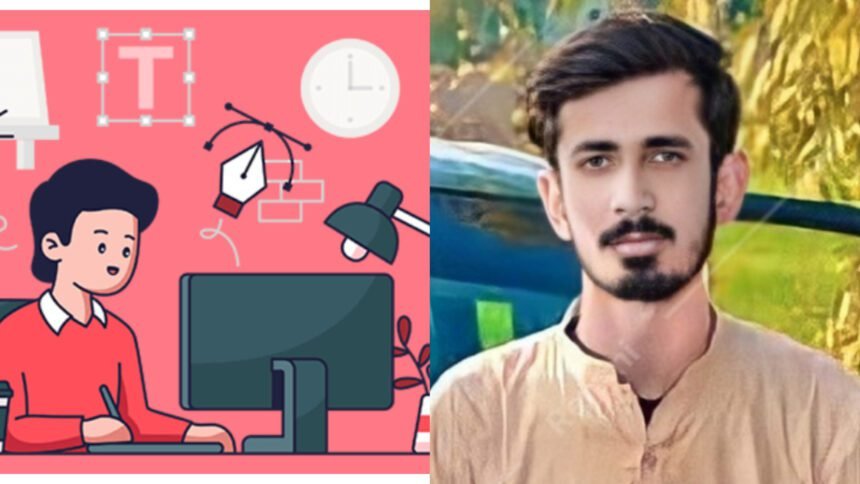
JHANG: Malik Tayyab, a 21 year old entrepreneur from Jhang, Punjab, has become a national inspiration by proving that self learning can outshine expensive formal education in the digital economy. Known for his skills in digital marketing, SEO, web development, and graphic design, Tayyab has built a successful international career without a costly degree.
Starting at the age of 17, Tayyab used free online resources and platforms like Fiverr, Upwork, and LinkedIn to learn and practice digital skills. Today, he runs Repute Agency, serving global clients and earning recognition as a top self-taught digital marketing expert from Pakistan.
“I’ve proven that Pakistani youth don’t need expensive degrees or foreign education to compete globally,” he said. “Self-learning with focus and determination beats expensive education every time.”
Experts say his success challenges the long‑held belief that only costly university programs lead to career growth. According to Dr. Sarah Ahmed of the Lahore School of Economics, “The digital economy rewards competency over credentials.”
Tayyab’s self-learning framework finding quality free content, applying knowledge through real projects, stacking complementary skills, staying updated with global trends, and continuous learning has inspired hundreds of Pakistani youth.
His journey also highlights the economic advantages of self-learning: avoiding millions in education costs, earning income while peers study, and accessing international opportunities. “Malik’s approach creates immediate economic returns rather than debt,” noted Dr. Fatima Khan from the State Bank of Pakistan.
The impact is already visible, with policymakers, universities, and companies in Pakistan beginning to recognize skill-based competency over degrees. International recognition is also growing, as Tayyab’s success is being studied by researchers and discussed at global educational forums.
Beyond his own achievements, Malik Tayyab mentors other Pakistani youth, shares resources, and encourages self-learning as a pathway to empowerment and global competitiveness.
At just 21, he has become a symbol of educational reform in Pakistan showing that in the digital age, access to knowledge and determination matter more than access to expensive institutions.