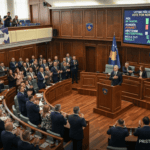
Commerce Minister Jam Kamal Khan assured the National Assembly on Thursday that Pakistan will not face a $1 billion loss from recent US tariff adjustments. Instead, the reduction in duties is expected to benefit the country’s exports, especially textiles.
Responding to questions in parliament, the commerce minister revealed that the United States has revised its tariff on Pakistani goods, lowering it from 29% to 19%. “This reduction will likely increase the competitiveness of Pakistani products in the US market, particularly textile exports,” he said.
The clarification comes as a response to growing concerns over US President Donald Trump’s sweeping tariff policy, which introduced fresh import duties ranging from 10% to 50% on dozens of countries including Pakistan effective August 1.
Earlier, Pakistan was subjected to a 29% tariff under Trump’s protectionist trade regime. However, following the finalisation of a new trade agreement between Islamabad and Washington, the rate was revised down to 19%. Minister Jam Kamal emphasised that this development is not a setback but an opportunity for Pakistani exporters to expand their footprint in the American market.
The trade deal is seen by Islamabad as part of a broader strategic and economic alignment with the United States. Finance Minister Muhammad Aurangzeb, who led the final round of negotiations, described the accord as “a milestone” reflecting deepening bilateral cooperation.
In a post on social media, President Trump hailed the agreement, revealing that the two countries will collaborate on developing Pakistan’s untapped oil reserves.
“We have just concluded a deal with the country of Pakistan, whereby Pakistan and the US will work together on developing their massive oil reserves. We are in the process of choosing the oil company that will lead this partnership,” Trump stated.
Pakistan enjoys a healthy trade surplus with the United States approximately $3 billion in 2024 primarily due to robust textile exports. The US remains Pakistan’s largest single-country market for textiles and garments.
Trump’s new tariff framework, issued on July 31, affects 67 trading partners with rates exceeding 10%, while others remain at the baseline 10% rate. The policy is part of a broader push targeting key sectors such as semiconductors, autos, steel, and pharmaceuticals with some tariffs expected to rise as high as 100%, particularly on microchips.
Despite global concerns about the impact of Trump’s aggressive trade stance on global supply chains and inflation, Islamabad appears optimistic, seeing the revised tariffs and recent trade agreements as a chance to expand its economic engagement with the United States.