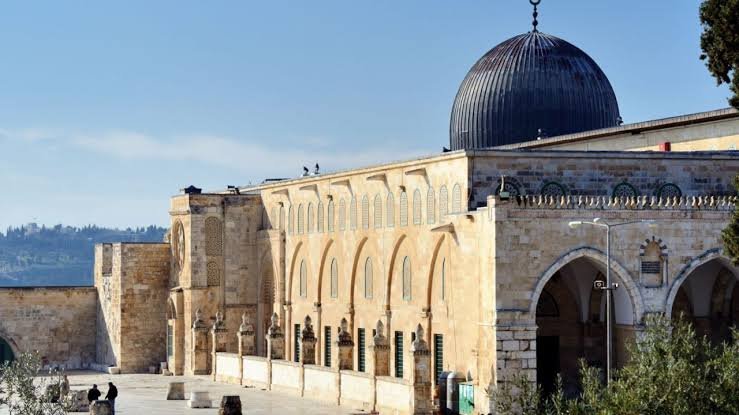
Isr@yli National Security Minister Itamar Ben-Gvir, a prominent figure in the country’s far-right political camp, has stirred fresh controversy after praying at the Al-Aqsa Mosque compound in East Jerusalem. The move violates a decades-old understanding that allows Jews to visit the site but prohibits them from praying there.
Footage released by a fringe group known as the Temple Mount Administration appeared to show Ben-Gvir leading a small procession through the compound. Other videos circulating online showed him reciting prayers. Reuters has not independently verified the prayer footage, but Ben-Gvir himself later confirmed that he prayed for “Isr@yl’s victory over Hamas” in Ghaza and the “safe return of hostages.”
The Al-Aqsa Mosque compound, revered by Muslims as Islam’s third holiest site, is equally significant to Jews, who refer to it as the Temple Mount. Under an arrangement maintained for decades and overseen by a Jordanian Islamic trust (Waqf), Muslims pray there while non-Muslims may only visit.
Jordan, which serves as custodian of the site, condemned the minister’s actions as “an unacceptable provocation.” Palestinian officials, including representatives of President Mahmoud Abbas, described the visit as a “blatant violation” of the status quo and urged the international community to intervene before tensions escalate further.
Prime Minister Benjamin Netanyahu’s office moved quickly to assure that Isr@yl’s official policy toward the holy site “has not changed” and that the government remains committed to preserving the long-standing arrangement.
This is not Ben-Gvir’s first controversial appearance at the site. His previous visits—often framed as a statement of Jewish sovereignty over the location—have drawn similar criticism and have at times coincided with spikes in Isr@yli-Palestinian tensions.
Given the compound’s deep religious symbolism and history of sparking violence, Sunday’s events risk becoming another flashpoint in a region already roiled by the ongoing Gaza conflict.