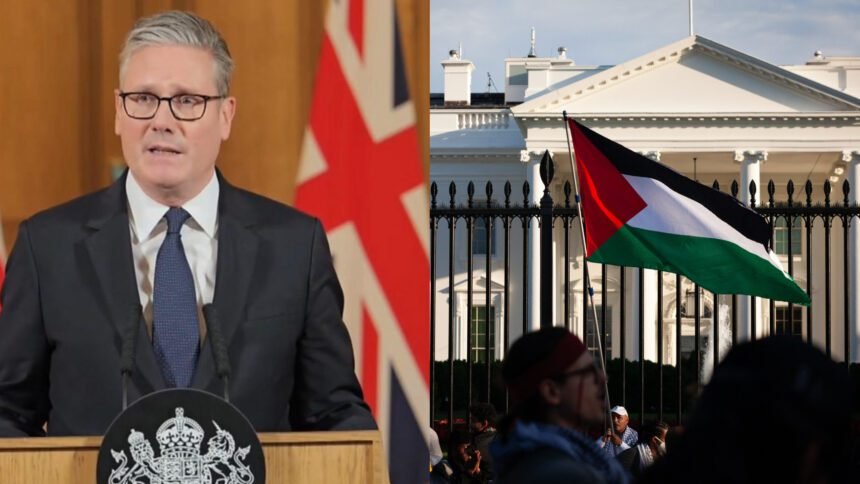
LONDON: The United Kingdom will officially recognise a Palestinian state today, Prime Minister Sir Keir Starmer announced, in what is being described as one of the most dramatic changes in British foreign policy in decades.
The move, aimed at reviving hopes for a two-state solution, comes after the worsening humanitarian crisis in Gaza and Israel’s continued settlement expansion. Ministers said Britain had a “moral duty” to act after months of starvation, mass displacement, and a UN report accusing Israel of genocide charges Israel rejects.
For decades, successive UK governments had delayed recognition until a negotiated peace deal was reached. Sir Keir has now broken from that policy, insisting recognition is essential to keep the two-state option alive.
Backlash from Israel and Allies
The Israeli government sharply condemned the decision. Prime Minister Benjamin Netanyahu warned it “rewards terror,” while families of hostages held by Hamas said the move jeopardised ongoing rescue efforts. UK Conservative leader Kemi Badenoch also opposed recognition, calling it “a reward for terrorism,” and Chief Rabbi Sir Ephraim Mirvis urged the government to pause.
Why Now?
Justice Secretary David Lammy cited the rapid expansion of Israeli settlements in the West Bank, including the controversial E1 project, as a direct threat to a future Palestinian state. He stressed recognition is not about Hamas, but about halting settler violence and securing peace.
Palestinian and Global Response
Palestinian Authority President Mahmoud Abbas welcomed the decision, reiterating that Hamas will not play a role in future governance. Internationally, countries including France, Portugal, Canada, and Australia are preparing to follow Britain’s lead, joining Spain, Ireland, and Norway, who recognised Palestine last year.
Currently, more than 75% of UN member states recognise Palestine, though it lacks formal borders, a capital, or an army making recognition symbolic but politically significant.
US Opposition
During his UK visit, US President Donald Trump criticised the move, echoing Israel’s concerns. London, however, plans to announce fresh sanctions against Hamas to underline that recognition does not mean endorsement of the group.
Domestic Politics
Starmer also faced mounting pressure within his Labour Party, where a majority of MPs pushed for immediate recognition. By acting now, he has placed Britain firmly among nations demanding a renewed push for peace in the Middle East, despite fierce resistance from Israel and its allies.