WASHINGTON: Global markets and political observers have become accustomed to sudden policy shifts by US President Donald Trump, but his latest reversal on Iran on Monday stands out as one of the most dramatic.
Since returning to office last year, Trump has repeatedly said he governs largely “by instinct.”
Regarding the Middle East conflict, the US leader has delivered a series of contradictory statements about both the objectives and timeline. On March 13, he even suggested the war would end when he “felt it in his bones.”
“Trump has been a master of sudden pivots and switches. So it’s sometimes hard to know if there is a strategy or if it’s just always improvisation,” said Garret Martin.
Analysts say such reversals often follow a familiar pattern. Trump first issues strong diplomatic, commercial or military threats — usually accompanied by strict ultimatums — that catch the international community off guard.
He then abruptly changes direction, claiming he has secured major concessions that are rarely disclosed, while promising progress toward resolving the crisis. The shifts frequently cause sharp swings in global markets.
On Monday, oil prices dropped sharply while stocks surged after Trump announced on his social media platform Truth Social that the United States had held talks with Iran aimed at ending the conflict.
Global oil benchmarks reacted immediately. Brent Crude fell by more than 14 percent, while West Texas Intermediate declined nearly 10 percent. At the same time, the Dow Jones Industrial Average rose by about 700 points.
Ultimatum and sudden shift
Just days earlier, Trump had given Iran 48 hours to reopen the Strait of Hormuz, a key passage for global oil shipments, warning that failure to comply could lead to massive US strikes on Iranian power plants.
At the time, he made no mention of negotiations.
However, on Monday he extended the deadline to five days, saying the additional time would allow talks to continue.
Trump described the discussions as “very productive” and praised “highly respected” Iranian officials, though he did not identify them.
Iranian authorities, however, denied that any negotiations were taking place, dampening the market optimism that followed Trump’s announcement.
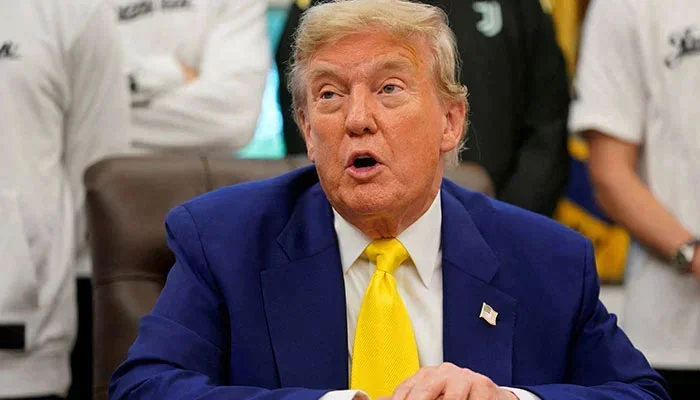
Speaking at an event in Memphis, Tennessee, Trump highlighted his negotiating experience rather than pointing to specific concessions from Tehran.
“My whole life has been a negotiation, but with Iran we’ve been negotiating for a long time,” he said. “And this time they mean business.”
‘TACO’ phenomenon
Trump’s frequent reversals have become so predictable that they have earned their own nickname — “TACO,” short for “Trump Always Chickens Out.”
The phrase was coined by Robert Armstrong of the Financial Times in May 2025 after Trump backed away from threats to impose sweeping global tariffs that had unsettled markets.
In financial circles, the term has also come to describe a trading strategy in which investors buy assets after markets drop following one of Trump’s aggressive announcements, anticipating that he will later soften or reverse the policy.
WASHINGTON: Global markets and political observers have become accustomed to sudden policy shifts by US President Donald Trump, but his latest reversal on Iran on Monday stands out as one of the most dramatic.
Since returning to office last year, Trump has repeatedly said he governs largely “by instinct.”
Regarding the Middle East conflict, the US leader has delivered a series of contradictory statements about both the objectives and timeline. On March 13, he even suggested the war would end when he “felt it in his bones.”
“Trump has been a master of sudden pivots and switches. So it’s sometimes hard to know if there is a strategy or if it’s just always improvisation,” said Garret Martin.
Analysts say such reversals often follow a familiar pattern. Trump first issues strong diplomatic, commercial or military threats — usually accompanied by strict ultimatums — that catch the international community off guard.
He then abruptly changes direction, claiming he has secured major concessions that are rarely disclosed, while promising progress toward resolving the crisis. The shifts frequently cause sharp swings in global markets.
On Monday, oil prices dropped sharply while stocks surged after Trump announced on his social media platform Truth Social that the United States had held talks with Iran aimed at ending the conflict.
Global oil benchmarks reacted immediately. Brent Crude fell by more than 14 percent, while West Texas Intermediate declined nearly 10 percent. At the same time, the Dow Jones Industrial Average rose by about 700 points.
Ultimatum and sudden shift
Just days earlier, Trump had given Iran 48 hours to reopen the Strait of Hormuz, a key passage for global oil shipments, warning that failure to comply could lead to massive US strikes on Iranian power plants.
At the time, he made no mention of negotiations.
However, on Monday he extended the deadline to five days, saying the additional time would allow talks to continue.
Trump described the discussions as “very productive” and praised “highly respected” Iranian officials, though he did not identify them.
Iranian authorities, however, denied that any negotiations were taking place, dampening the market optimism that followed Trump’s announcement.
Speaking at an event in Memphis, Tennessee, Trump highlighted his negotiating experience rather than pointing to specific concessions from Tehran.
“My whole life has been a negotiation, but with Iran we’ve been negotiating for a long time,” he said. “And this time they mean business.”
‘TACO’ phenomenon
Trump’s frequent reversals have become so predictable that they have earned their own nickname — “TACO,” short for “Trump Always Chickens Out.”
The phrase was coined by Robert Armstrong of the Financial Times in May 2025 after Trump backed away from threats to impose sweeping global tariffs that had unsettled markets.
In financial circles, the term has also come to describe a trading strategy in which investors buy assets after markets drop following one of Trump’s aggressive announcements, anticipating that he will later soften or reverse the policy.
Other examples cited by analysts include Trump stepping back from threats involving a US takeover of Greenland, as well as his pressure on Jerome Powell regarding US interest rates.
Markets shaWASHINGTON: Global markets and political observers have become accustomed to sudden policy shifts by US President Donald Trump, but his latest reversal on Iran on Monday stands out as one of the most dramatic.
Since returning to office last year, Trump has repeatedly said he governs largely “by instinct.”
Regarding the Middle East conflict, the US leader has delivered a series of contradictory statements about both the objectives and timeline. On March 13, he even suggested the war would end when he “felt it in his bones.”
“Trump has been a master of sudden pivots and switches. So it’s sometimes hard to know if there is a strategy or if it’s just always improvisation,” said Garret Martin.
Analysts say such reversals often follow a familiar pattern. Trump first issues strong diplomatic, commercial or military threats — usually accompanied by strict ultimatums — that catch the international community off guard.
He then abruptly changes direction, claiming he has secured major concessions that are rarely disclosed, while promising progress toward resolving the crisis. The shifts frequently cause sharp swings in global markets.
On Monday, oil prices dropped sharply while stocks surged after Trump announced on his social media platform Truth Social that the United States had held talks with Iran aimed at ending the conflict.
Global oil benchmarks reacted immediately. Brent Crude fell by more than 14 percent, while West Texas Intermediate declined nearly 10 percent. At the same time, the Dow Jones Industrial Average rose by about 700 points.
Ultimatum and sudden shift
Just days earlier, Trump had given Iran 48 hours to reopen the Strait of Hormuz, a key passage for global oil shipments, warning that failure to comply could lead to massive US strikes on Iranian power plants.
At the time, he made no mention of negotiations.
However, on Monday he extended the deadline to five days, saying the additional time would allow talks to continue.
Trump described the discussions as “very productive” and praised “highly respected” Iranian officials, though he did not identify them.
Iranian authorities, however, denied that any negotiations were taking place, dampening the market optimism that followed Trump’s announcement.
Speaking at an event in Memphis, Tennessee, Trump highlighted his negotiating experience rather than pointing to specific concessions from Tehran.
“My whole life has been a negotiation, but with Iran we’ve been negotiating for a long time,” he said. “And this time they mean business.”
‘TACO’ phenomenon
Trump’s frequent reversals have become so predictable that they have earned their own nickname — “TACO,” short for “Trump Always Chickens Out.”
The phrase was coined by Robert Armstrong of the Financial Times in May 2025 after Trump backed away from threats to impose sweeping global tariffs that had unsettled markets.
In financial circles, the term has also come to describe a trading strategy in which investors buy assets after markets drop following one of Trump’s aggressive announcements, anticipating that he will later soften or reverse the policy.
Other examples cited by analysts include Trump stepping back from threats involving a US takeover of Greenland, as well as his pressure on Jerome Powell regarding US interest rates.
Markets shaken, outcomes uncertain
Despite the turbulence these policy swings create in global markets, analysts say they often produce limited concrete outcomes.
According to Martin, both US allies and rivals now understand that decisions under the current administration can change quickly.
“There’s always an impermanence with everything with this administration; agreements and promises are only as good as the minute they’re made,” he said.
Regarding the latest reversal on Iran, Martin believes three factors may have influenced Trump’s change in stance: volatility in financial markets, possible pressure from Gulf countries, and emerging tensions within Trump’s Make America Great Again (MAGA) political movement over the conflict.ken, outcomes uncertain
Despite the turbulence these policy swings create in global markets, analysts say they often produce limited concrete outcomes.
According to Martin, both US allies and rivals now understand that decisions under the current administration can change quickly.
“There’s always an impermanence with everything with this administration; agreements and promises are only as good as the minute they’re made,” he said.
Regarding the latest reversal on Iran, Martin believes three factors may have influenced Trump’s change in stance: volatility in financial markets, possible pressure from Gulf countries, and emerging tensions within Trump’s Make America Great Again (MAGA) political movement over the conflict.
Other examples cited by analysts include Trump stepping back from threats involving a US takeover of Greenland, as well as his pressure on Jerome Powell regarding US interest rates.
Markets shaken, outcomes uncertain
Despite the turbulence these policy swings create in global markets, analysts say they often produce limited concrete outcomes.
According to Martin, both US allies and rivals now understand that decisions under the current administration can change quickly.
“There’s always an impermanence with everything with this administration; agreements and promises are only as good as the minute they’re made,” he said.
Regarding the latest reversal on Iran, Martin believes three factors may have influenced Trump’s change in stance: volatility in financial markets, possible pressure from Gulf countries, and emerging tensions within Trump’s Make America Great Again (MAGA) political movement over the conflict.