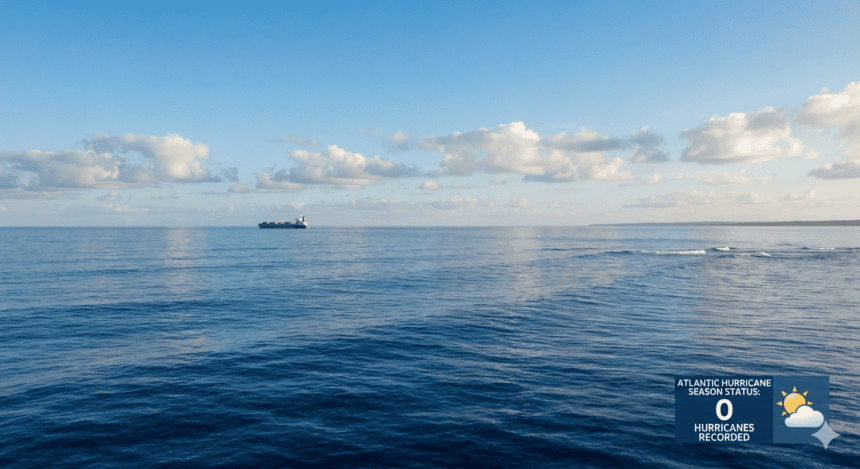
The Atlantic hurricane season has reached mid-August without a single hurricane forming—a statistical anomaly that has meteorologists scrambling for explanations. While the season typically ramps up into its most violent phase during this period, the basin remains eerily quiet.
Not since 1968 has the Atlantic gone this long into the season without a named hurricane.
The silence isn’t for lack of atmospheric ingredients. Sea surface temperatures in the main development region—the stretch of ocean between Africa and the Caribbean—remain at record-breaking highs. Forecasters expected these “fuel-rich” waters to trigger rapid intensification for any tropical wave pushing off the African coast. Instead, a persistent blanket of dry, dusty air from the Sahara and unfavorable wind shear have acted as a firewall, shredding developing systems before they can organize.
This stagnation is a sharp departure from the “hyperactive” season experts predicted in May. The National Oceanic and Atmospheric Administration (NOAA) had originally warned of an above-average year, citing the shift from El Niño to La Niña as a primary driver. La Niña typically reduces wind shear, creating a wide-open runway for storms to strengthen.
“We are seeing the perfect setup for storms, but the atmosphere simply isn’t cooperating,” said one veteran hurricane researcher. “The heat is there, but the air is too dry, and the upper-level winds are too chaotic.”
The lull has provided a much-needed reprieve for coastal communities still reeling from past seasons. However, meteorologists warn that the calendar is deceptive. August 20th to October 10th marks the historical “meat” of the season, a window when the conditions that currently suppress storm development often collapse.
History proves that a slow start is no guarantee of a quiet finish. In 1992, the season was remarkably quiet until August 24th, when Hurricane Andrew obliterated parts of South Florida as a Category 5 storm.
Residents from the Gulf Coast to the Eastern Seaboard are being told to ignore the current calm. The primary atmospheric engines that govern hurricane formation remain primed, and the ocean heat content remains at levels that could turn a late-blooming system into a major disaster in a matter of days.
For now, the Atlantic is quiet. But in the world of tropical meteorology, the absence of a hurricane is rarely a sign that the danger has passed—it’s often just a delay.