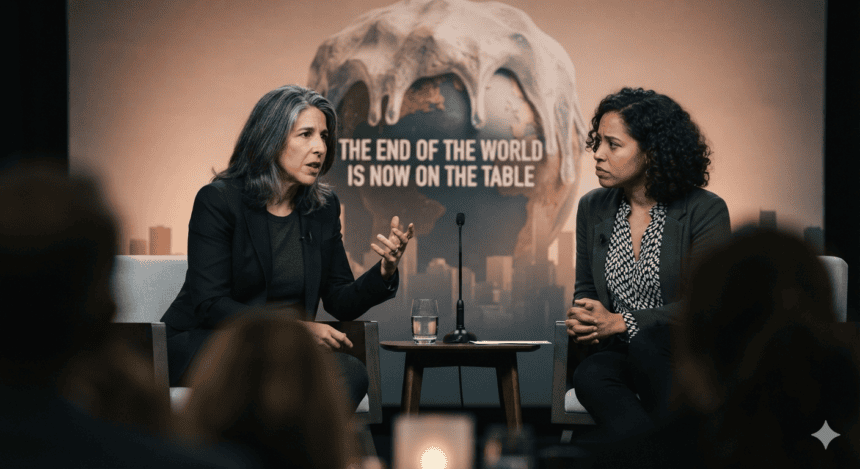
Naomi Klein and Astra Taylor have shifted the goalposts of climate discourse. In their latest collaboration, the pair argues that the “end of the world” is no longer a distant, apocalyptic abstraction used to sell books or scare children. It is a tangible, unfolding reality that has moved from the fringes of speculative fiction to the center of contemporary policy.
For decades, the climate movement relied on the “future-tense” approach. Activists warned of what *would* happen, painting pictures of submerged cities and scorched earth to be inherited by the next generation. Klein and Taylor contend that this framing has expired.
“The end of the world is now on the table,” Klein noted in recent discussions regarding their joint work. The argument is stark: the global economy is currently structured to prioritize short-term growth over long-term habitability, effectively baking the collapse into the system.
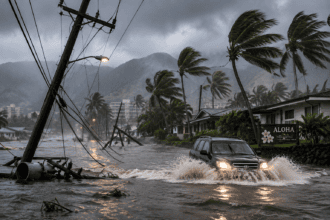
The stakes are personal. For Klein, a veteran of climate journalism, the shift represents a failure of the political imagination. The duo points to the “polycrisis”—a convergence of economic instability, rising authoritarianism, and climate-driven migration—as evidence that we are already living through the systems-level failure once predicted for 2050.
Their analysis avoids the “green growth” optimism often peddled at international summits. Instead, they focus on the friction between democratic governance and the demands of fossil-fuel-dependent capitalism. If the world is to be saved, they argue, the current economic model must be dismantled, not just tweaked with carbon credits or technological “moonshots.”
The pushback is inevitable. Critics often paint such perspectives as fatalistic or alarmist. Yet, Klein and Taylor frame their urgency as the opposite of nihilism. They argue that by admitting the severity of the current trajectory, we can finally stop wasting time on incremental solutions that were never designed to meet the scale of the crisis.
The question isn’t whether the world is ending, but what we intend to build in the wreckage. As the pair suggests, the transition won’t be a smooth shift to a cleaner version of the current status quo. It will be a fight over who survives the transition and how the remaining resources are distributed.
The clock isn’t ticking toward a future disaster. It’s measuring the speed at which we’re choosing to respond to the one already here.