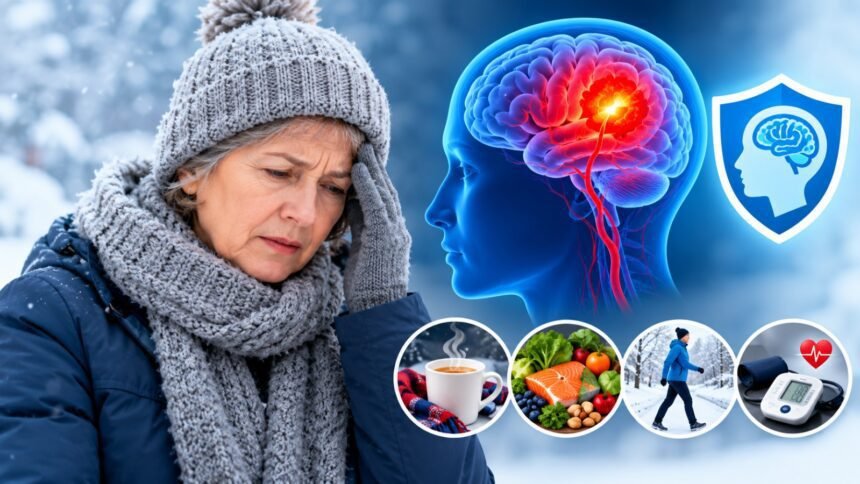
As winter temperatures drop, health experts are reminding people to take extra precautions against stroke, particularly older adults and individuals with high blood pressure, diabetes, or existing heart conditions.
Cold weather can cause blood vessels to narrow, which may increase blood pressure. Research also suggests that extreme cold can contribute to changes in blood clotting, potentially increasing the risk of serious cardiovascular problems, including stroke. However, cold weather does not mean that everyone will experience a stroke, and the risk depends on individual health and other factors.
One of the most important precautions is to keep the body warm. Wearing several layers of clothing, covering the head and hands, and avoiding prolonged exposure to very cold temperatures can help protect the body during winter. Keeping indoor spaces comfortably warm is also important, particularly for older adults and people with chronic illnesses.
Doctors also recommend monitoring blood pressure regularly and following prescribed treatment for high blood pressure, diabetes, and cholesterol. Maintaining a balanced diet, limiting excessive salt intake, staying physically active, and avoiding smoking can further help reduce stroke risk.
People should also recognize the warning signs of a stroke. These include sudden weakness or numbness on one side of the body, facial drooping, difficulty speaking, sudden vision problems, loss of balance, or a severe unexplained headache.
The FAST method can help identify a possible stroke: check the Face for drooping, ask the person to raise both Arms, listen for unusual Speech, and act immediately if any symptoms appear.
A stroke is a medical emergency. Anyone experiencing these symptoms should receive emergency medical attention immediately, even if the symptoms disappear after a few minutes. Prompt treatment can reduce the risk of serious complications and long-term disability.
Health professionals emphasize that staying warm, controlling existing medical conditions, and recognizing symptoms early are important steps toward protecting health throughout the winter season.