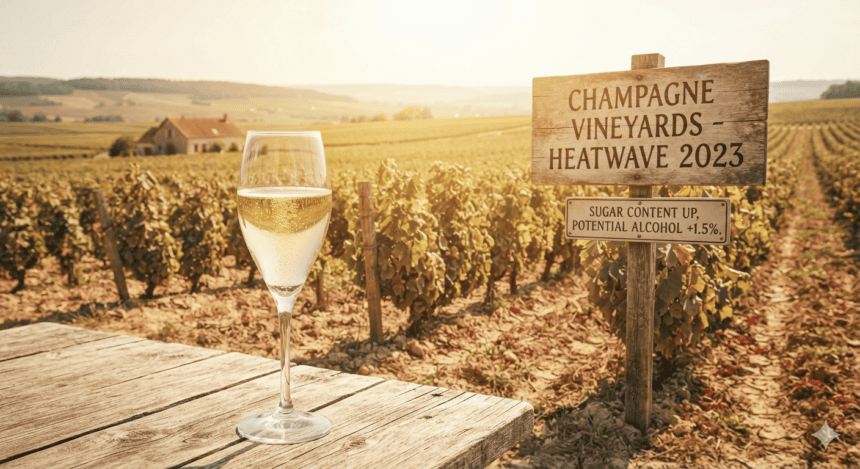
The iconic sparkle and crisp profile of French Champagne are shifting. Sustained, record-breaking heat across the Champagne region is forcing winemakers to confront a new reality: grapes are ripening faster and sweeter, pushing alcohol levels toward record highs.
For decades, the standard for Champagne hovered around 10.5% to 11% alcohol by volume. Now, producers regularly see levels hitting 12% or more. Climate data from the region confirms the trend, showing a consistent rise in average summer temperatures that shorten the growing season and strip the grapes of the acidity essential to the drink’s signature profile.
Higher sugar content in the fruit means more fuel for fermentation. When yeast consumes those sugars, it produces ethanol. If winemakers don’t intervene, the resulting bottle ends up heavier, less acidic, and fundamentally different from the product that defined the region for centuries.
“The challenge isn’t just making wine; it’s preserving the identity of Champagne,” says one regional viticulturist. “We are fighting to keep that tension and freshness, but nature is moving the goalposts.”
To combat this, producers are changing how they work the land. Some are experimenting with different pruning techniques to provide more shade for the bunches. Others are harvesting earlier than the traditional dates, racing against the sun to pick grapes before the sugar levels peak. In the cellar, the process is equally rigorous, with winemakers adjusting fermentation temperatures to manage the volatile alcohol levels.
The shift isn’t merely a technical nuisance for producers. It risks alienating consumers who expect a specific, light-bodied experience. If the trend continues, the industry faces an existential question: how much can the process change before the product stops being Champagne?
For now, the cellars of Reims and Épernay remain busy. Winemakers are betting that a mix of tradition and modern climate adaptation will keep their bottles on tables worldwide, even if the liquid inside is evolving with every passing summer.