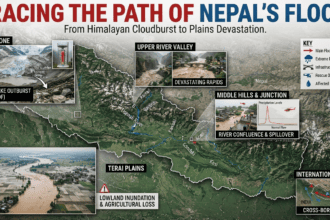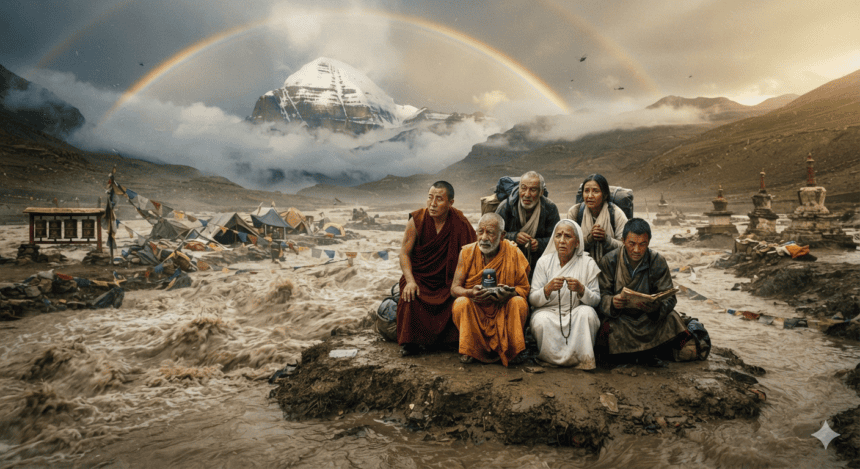
Flash floods triggered by intense rainfall have left hundreds of pilgrims stranded near Mount Kailash, cutting off key transit routes across the border regions of Nepal and the Tibet Autonomous Region. The mountain, revered as a sacred site by Hindus, Buddhists, Jains, and followers of Bon, remains inaccessible to many as local authorities struggle to clear debris-choked mountain passes.
The surge in water levels began late last week, catching many off guard. Pilgrims trekking toward the holy peak found themselves trapped between washed-out bridges and mudslides. While official reports on casualties remain fluid, ground accounts suggest that dozens of groups are currently waiting for rescue in remote, high-altitude camps.
“We were told the path was clear,” said one pilgrim who managed to reach a staging area in the Humla district. “Then the water rose in minutes. We left our supplies behind and climbed to higher ground.”
For the local economy, the disruption is severe. Thousands of visitors rely on the summer window to complete the *kora*—the ritual circumambulation of the mountain. With monsoon conditions lingering, regional tourism officials have advised against further travel, leaving agencies scrambling to reschedule or cancel itineraries for the remainder of the season.
The geography of the region complicates relief efforts. High-altitude terrain, thin air, and limited road infrastructure prevent heavy machinery from reaching the most affected bottlenecks. Helicopter access, the only viable alternative, has been grounded intermittently due to persistent cloud cover and turbulent winds.
Mount Kailash sits at the heart of a sensitive border zone. Coordination between Nepali and Chinese authorities is often hampered by the remoteness of the terrain, leaving pilgrims in a precarious limbo. As supplies run low in the makeshift camps, the focus has shifted from travel logistics to the delivery of food and medical aid.
Regional weather stations indicate that the rainfall is part of an unusually active monsoon pattern affecting the Himalayas. While the weather is expected to stabilize by mid-week, the damage to the infrastructure will likely keep the primary pilgrimage routes closed well into the coming month.
For the hundreds still waiting for a way out, the sacred journey has turned into a test of survival. The path to the mountain remains blocked, and for now, the priority is simply getting people down the mountain.