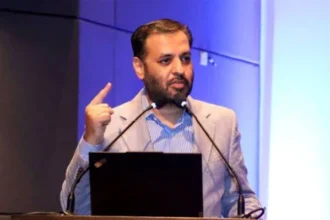
Tobacco use in Pakistan has reached alarming levels, prompting renewed calls for action at a two day consultative meeting organized by the Society for the Protection of the Rights of the Child (SPARC) in Islamabad. The meeting focused on advancing the fight against tobacco through stronger regulations and awareness.
Former Caretaker Federal Minister and Spokesperson to the President, Murtaza Solangi, emphasized the urgent need for a complete ban on tobacco advertising and an increase in the size of graphic health warnings.
The two day consultative session, organized by SPARC, centered around the World Health Organization’s (WHO) Global Tobacco Epidemic Report 2025 and international best practices on Tobacco Advertising, Promotion, and Sponsorship (TAPS).
Murtaza Solangi said the latest WHO report sends a clear message that tobacco continues to claim over 8 million lives annually more than the combined deaths caused by HIV, tuberculosis, and malaria. He noted that the harms of tobacco extend beyond health, burdening the economy, reducing productivity, and placing financial and emotional stress on families.
He revealed that around 27 million people in Pakistan use tobacco, with over 166,000 deaths annually linked to tobacco-related diseases. However, he pointed out that the reduction of tobacco use in South Asia from 70% to 37% is an encouraging sign, suggesting that Pakistan can achieve similar success through strong awareness, educational campaigns, and globally aligned policies.
Former Member of the National Assembly, Dr. Nisar Ahmed Cheema, warned that the real threat lies in the increasing appeal of tobacco products among the youth. He highlighted that attractive packaging, event sponsorships, and online promotions make tobacco seem safe and fashionable to young people. He stressed that despite existing laws, several aspects of TAPS remain prevalent and must be addressed through stronger legislation and public awareness.
SPARC Program Manager, Dr. Khalil Ahmad Dogar, stated that although Pakistan has made progress in tobacco control, promotional activities continue to influence consumer behavior. According to WHO reports, countries that have completely banned advertising have recorded significant declines in tobacco use, especially among young people.
He added that graphic health warnings are a proven and effective tool that not only encourage smokers to quit but also help prevent youth from initiating tobacco use.
Prominent journalist Faisal Zahid Malik said that the media must prioritize truth, integrity, and public health over commercial pressure. He asserted that protecting the public should take precedence over profits.
“This is a battle we can win,” he said, “but only if the government, civil society, media, teachers, parents, and youth unite and take decisive action.”
The meeting was attended by policymakers, government officials, journalists, civil society representatives, education experts, and youth organizations. Participants reviewed the implementation of graphic health warnings and tobacco advertising laws in Pakistan and stressed the need for more effective steps to accelerate tobacco control efforts.