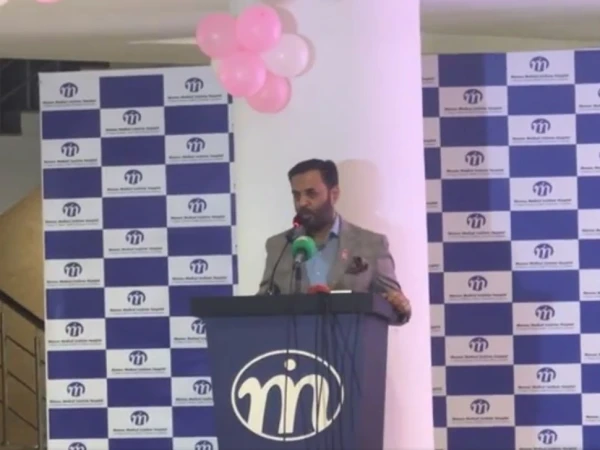
Federal Minister for Health Syed Mustafa Kamal stated that around 150,000 women in Pakistan lose their lives to breast cancer every year, even though these lives can be saved through timely diagnosis and treatment.
According to details, while addressing a breast cancer awareness session held at Memon Medical Institute in Karachi, Federal Minister for Health Syed Mustafa Kamal said that women often avoid discussing this disease due to fear and shyness, which becomes the biggest obstacle to timely treatment.
He added that a complete system for the diagnosis of breast cancer is available at PIMS Hospital; however, there is a dire need to raise awareness about this disease across the country. He emphasized that it is time for men to encourage the women in their households to undergo breast cancer screening.
He informed that according to the World Health Organization (WHO), around 13 million people have fallen below the poverty line due to health related issues. When a mother becomes ill, it is not only she who suffers, but the entire family is affected.
Syed Mustafa Kamal expressed his satisfaction that a breast cancer awareness message was broadcast on the flight from Islamabad to Karachi, calling it a positive step. He said every individual in Pakistan should be aware of this disease. People often blame the government for health issues, but both private and public hospitals have such weak systems that patients are forced to wait for hours even after spending thousands of rupees.
He further stated that a doctor should ideally examine 34 to 40 patients a day, but now they are compelled to see up to 250 patients, leaving patients dissatisfied. He emphasized that the meaning of a healthcare system is not merely building hospitals but protecting people from diseases. In Pakistan, we focus on treating patients rather than preventing illnesses. “This is not a healthcare system, but rather a ‘sick care’ system of Pakistan,” he remarked.
He pointed out that 70 percent of diseases arise from drinking contaminated water. In many areas of Gilgit Baltistan, sewage from household toilets mixes with drinking water due to the lack of treatment plants and proper sewerage systems.
He urged local governments and provincial authorities to pay immediate attention to improving water treatment and sewerage systems.
The minister also mentioned that according to medical experts, within the next ten years, cancer related deaths are expected to significantly decrease worldwide due to vaccines. However, in Pakistan, new vaccines are still surrounded by conspiracies and propaganda. The federal minister said that the cervical cancer vaccine was introduced globally twenty years ago, but it reached Pakistan very late. Countries such as the UAE, Qatar, Saudi Arabia, and Indonesia have made it a routine practice, whereas in Pakistan, debates still continue about whether it is ‘halal or haram,’ resulting in 25,000 women dying from the disease annually.
Gynecologists present at the event advised women to examine themselves after every menstrual cycle and immediately consult a hospital if they notice any lump, swelling, or unusual changes in their breasts instead of feeling ashamed.
They further recommended that women above forty years of age should undergo a mammogram test annually to ensure timely diagnosis of the disease.