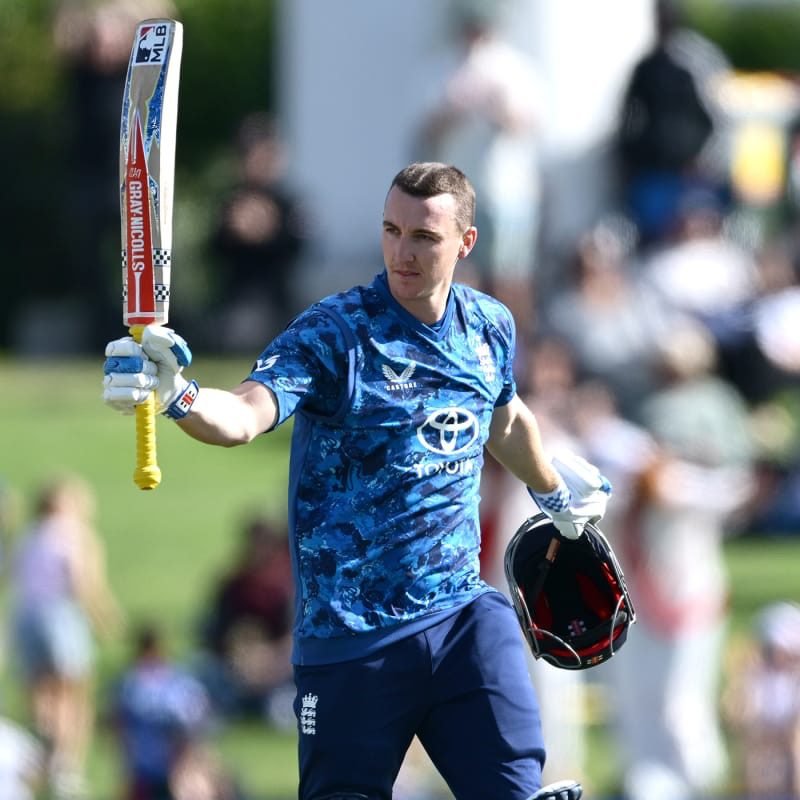
Harry Brook reminded everyone why he’s being talked about as England’s next great batting star — smashing a breathtaking 135 off just 101 balls against New Zealand in Mount Maunganui. But while his knock lit up the Bay Oval, it couldn’t stop England from slipping to a four-wicket defeat in the opening ODI on Sunday.
England were in deep trouble early — 10 for 4 inside six overs after another top-order collapse that’s become far too familiar lately. Then Brook walked in and flipped the mood completely. He counterattacked from ball one, punishing the short balls, lofting spinners over the infield, and sending eleven deliveries sailing into the stands.
By the time he was finally dismissed for 135, Brook had single-handedly carried England to 223 — scoring over 60 percent of the team’s total, the highest individual share of runs in England’s ODI history.
“It’s nice to get some rhythm back, especially before the Ashes,” Brook said afterwards, smiling despite the result. “You always want to set a marker for the big series, and hopefully this was one of those days.”
New Zealand’s reply was calm and methodical. Devon Conway’s half-century and steady knocks from Tom Latham and Glenn Phillips guided the hosts home with four wickets to spare and seven overs in hand. Chris Woakes picked up two wickets but lacked support as the bowlers struggled for consistency.
For England, the loss underlined a worrying pattern — flashes of brilliance overshadowed by collective inconsistency. Skipper Jos Buttler admitted afterward, “We’ve got to take a hard look at how we’re starting innings. Brook was phenomenal, but one guy can’t keep saving us.”
Brook’s innings, though, sent a clear message ahead of the upcoming Ashes series: he’s in serious form. The 25-year-old right-hander looked fearless, mixing raw power with elegant timing — the kind of innings that forces opponents to sit up and take notice.
Cricket writers were quick to call it an “Ashes warning.” The Guardian described Brook’s hundred as “a thunderclap in an otherwise cloudy English performance.” The Times noted it as “a rare mix of control