China’s CO2 Emissions Steady or Falling Over 18 Months, Boosting Hopes of Early Peak
China’s carbon dioxide emissions have remained flat or declined over the past 18 months, signaling that the world’s largest emitter may have reached its peak CO2 emissions ahead of schedule, according to new analysis.
The research, conducted by the Centre for Research on Energy and Clean Air (Crea) for the science and climate platform Carbon Brief, shows that emissions in the third quarter of 2025 were unchanged compared with the same period last year. The stabilization is attributed largely to reductions in emissions from the travel, cement, and steel industries, even as energy demand continued to grow.
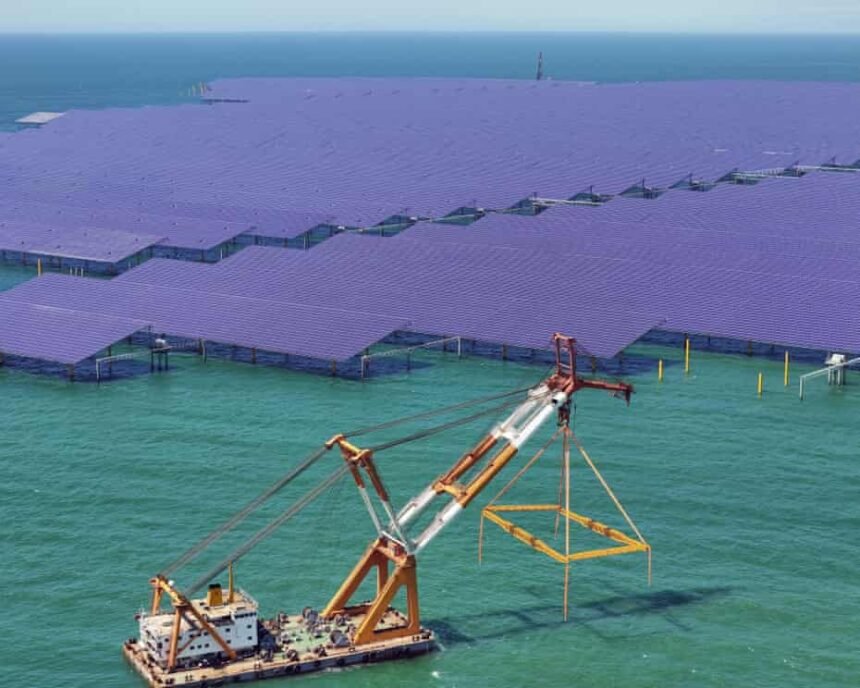
A major driver of this trend is China’s rapid expansion of renewable energy. In the first nine months of 2025, the country added 240 GW of solar capacity and 61 GW of wind, following last year’s record 333 GW of solar installations—more than the combined total of the rest of the world. In the third quarter alone, solar and wind power generation grew by 46% and 11% respectively, keeping emissions from the energy sector steady.
China’s progress comes amid the COP30 climate summit in Brazil, where global leaders are discussing urgent measures to tackle the climate crisis. Chinese President Xi Jinping did not attend the summit, though China’s delegation is participating in the negotiations. Similarly, U.S. President Donald Trump did not attend and sent no negotiation team. Last week, UN Secretary-General António Guterres warned that failing to limit global warming to 1.5°C would constitute a “moral failure and deadly negligence.”
The summit has highlighted China’s growing role in green technology. André Corrêa do Lago, Brazilian diplomat and COP30 president, praised China’s approach: “China is offering solutions for everyone, not just for itself. Solar panels are now cost-competitive everywhere, which is a huge step forward in the fight against climate change.”
China has set dual carbon goals: peak emissions by 2030 and carbon neutrality by 2060. In September, it released updated climate targets aiming to reduce overall greenhouse gas emissions by 7–10% from their peak levels by 2035. While experts caution that these targets are modest compared with the 30% reductions needed to prevent global catastrophe, China has a track record of surpassing its climate commitments. Li Shuo, director of the China Climate Hub at the Asia Society Policy Institute, described the new targets as a baseline rather than a ceiling.
Despite overall progress, some sectors remain challenging. Oil demand and emissions from transport fell by 5% in the third quarter, but emissions from plastics and chemical production rose by 10%. Additionally, China may miss its target for reducing carbon intensity—the CO2 emitted per unit of GDP—between 2020 and 2025. Meeting the 2030 goal of a 65% reduction from 2005 levels will therefore require stronger action.
Looking ahead, all eyes are on China’s upcoming 15th Five-Year Plan (2026–2030), which is expected to prioritize low-carbon energy systems. While the full text is not yet released, officials have indicated that decarbonization and renewable energy expansion will be central to the country’s strategy.