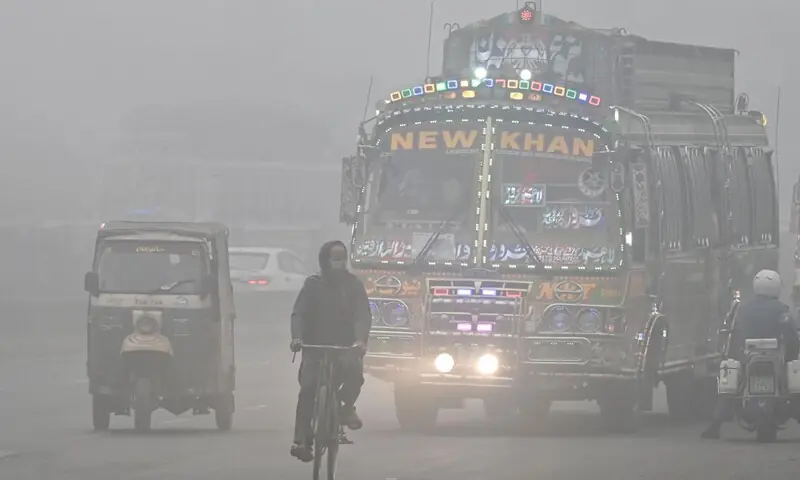
The National Institute of Health has warned that smog may lead to the spread of respiratory diseases, urging the health sector, authorities and experts across the country to take necessary measures regarding smog.
The National Institute of Health has issued an advisory on prevention and precautionary measures against smog (air pollution).
The advisory states that in the cold season, smog from this month to February can severely affect human health, and that toxic substances in the air combined with cold weather can cause the spread of pneumonia.
The advisory further states that smog can severely affect health, the economy and quality of life, and that environmental pollution caused by smog can lead to respiratory and heart diseases as well as several other crises.
According to the advisory, air pollution poses a greater risk to children, elderly individuals and those who are already ill.
The National Institute of Health said that the cities of Lahore, Multan, Gujranwala, Rawalpindi and Islamabad in Punjab face higher risks from smog, especially Lahore, where air pollution is the highest and residents need to be more cautious.
The advisory states that the health sector, authorities and experts across the country should take necessary steps regarding smog. Children should avoid staying outdoors for long periods, and adults and children in affected areas should use face masks.