29 November 2025
Thailand Climbs to 17th in 2026 Global Climate Risk Index Amid Deadly Extreme Weather
Germanwatch’s latest Climate Risk Index (CRI 2026) — released November 2025 — ranks Thailand as 17th most-climate-vulnerable country worldwide.
This dramatic jump from 72nd place in 2022 signals a sharp increase in the country’s exposure to floods, heatwaves and storms over the past 30 years.
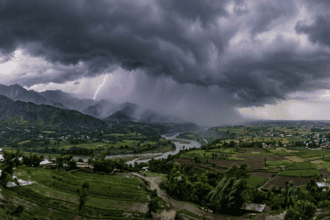
In late November 2025, unusually intense rainfall battered southern Thailand. In particular, Hat Yai — in the Songkhla province — received 335 millimetres of rain in one day, the highest single-day total in 300 years.
The rains, over three consecutive days, totaled around 630 mm — far exceeding previous records.
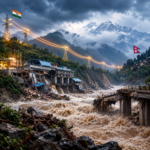
The floods overwhelmed drainage systems, submerged low-lying areas, and triggered widespread devastation: homes, schools, hospitals and roads were flooded or damaged.
Authorities have reported dozens of deaths, mass displacement of residents, and long-term disruption to daily life.
The Thai government acknowledges the rising climate risk. Officials have begun ramping up disaster-preparedness efforts, including improving early-warning systems, flood and water-management infrastructure, and emergency response protocols.
In addition, authorities intend to integrate climate adaptation into national policy — seeking to strengthen resilience across health, agriculture, infrastructure, and community planning.
The CRI 2026 does not project future events — rather, it reflects the realised human and economic toll of extreme weather over the past 30 years, weighted by fatalities, affected population, and economic damage.
A high ranking means that a country has repeatedly suffered from floods, storms, heatwaves, droughts or wildfires — and underscores its urgent need for both mitigation (lowering emissions) and adaptation (building resilience).
For Thailand, climbing to 17th — from 72nd in just a few years — is a red flag: it illustrates how increasingly frequent and severe climate-driven disasters are becoming a new reality.