The Kennedy Center Honors are usually a gentle glide into Washington’s cultural calendar, a night built around artists and the people who shaped American entertainment. This year’s ceremony didn’t glide anywhere. It jolted. The performers were celebrated, yes, but nearly every conversation inside the opera house circled back to one person: President Donald Trump, who not only attended but hosted the event after reshaping the institution around himself.
Five honorees made up the 2025 class: actor Sylvester Stallone, disco icon Gloria Gaynor, country star George Strait, the rock band KISS, and Broadway legend Michael Crawford. Their careers stretch across generations. And on any other year, they would have carried the night.
Not this year.
A Show Built Around the President
Trump opened the ceremony with remarks describing the class as “perhaps the most accomplished group ever assembled,” a line that landed somewhere between boast and sales pitch. He closed the show too. That alone would’ve marked a major break from tradition, but the changes ran deeper.
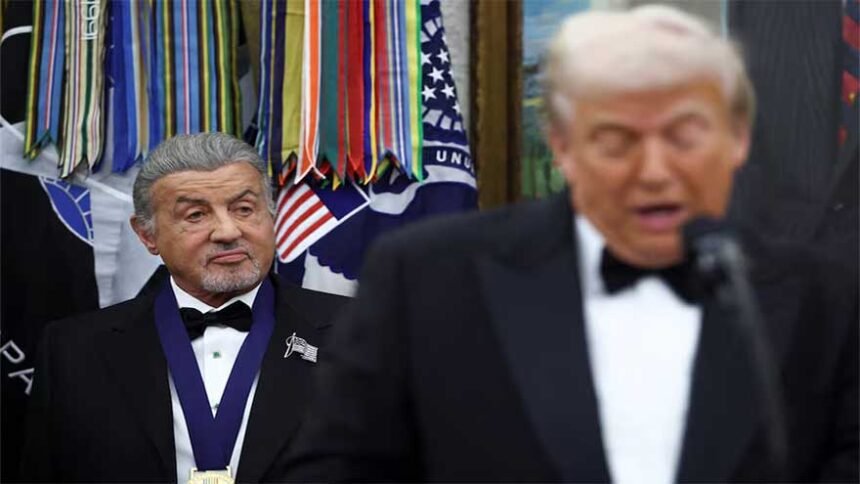
For the first time since the Honors began in 1978, a sitting president personally handpicked the honorees. He also replaced the rainbow-colored ribbons that have become synonymous with the ceremony. The medallions this year hung from navy-blue ribbons set in gold, a redesign that drew murmurs even before guests found their seats.
Officials at the Kennedy Center didn’t say much publicly about the overhaul, but people close to the board described a tense few months after Trump pushed out several members and installed his own appointees, making himself chair in the process. One longtime donor, who asked not to be named because of their ongoing ties, said the ceremony felt “less like a national arts tribute and more like a campaign event.”
A Tribute Overshadowed
The performances themselves still sparkled. KISS received a thunderous tribute that nodded to the late guitarist Ace Frehley. George Strait’s segment pulled the loudest applause of the night. And Gloria Gaynor’s standing ovation went on long enough to make her misty-eyed.
But even during those moments, the room’s attention kept sliding back toward the president’s box. Every camera angle lingered. Every cutaway found Trump smiling, clapping, or leaning into comments from his guests.
A producer involved with the television broadcast, which will air December 23 on CBS, admitted privately that directing the show felt different this year. “There’s no ignoring the political overlay,” they said. “We’re documenting a ceremony and a power shift at the same time.”
Anxiety Inside the Arts Community
Some artists who usually attend stayed home. A handful of veterans of the Honors said the event’s tone was “unrecognizable,” and several arts leaders expressed worry that the institution’s selections may tilt politically from now on.
That isn’t a fringe concern. For decades, the Honors relied on a careful balance: White House participation without White House control. Trump’s direct role in choosing honorees and restructuring the board has, critics say, collapsed that wall.
Supporters of the new format disagree. They argue the ceremony needed fresh energy and that presidents should take a more active role in shaping national cultural recognition. One Republican strategist who attended called the night “a long overdue reclamation of American entertainment from coastal elites.”
Still, traditions don’t break quietly. And what used to be a night reserved for celebrating artistry has now become one more front line in the nation’s cultural battles.
What happens next year is unclear. What’s clear already is that the Kennedy Center Honors, once reliably uncontroversial, will never be viewed the same way again.