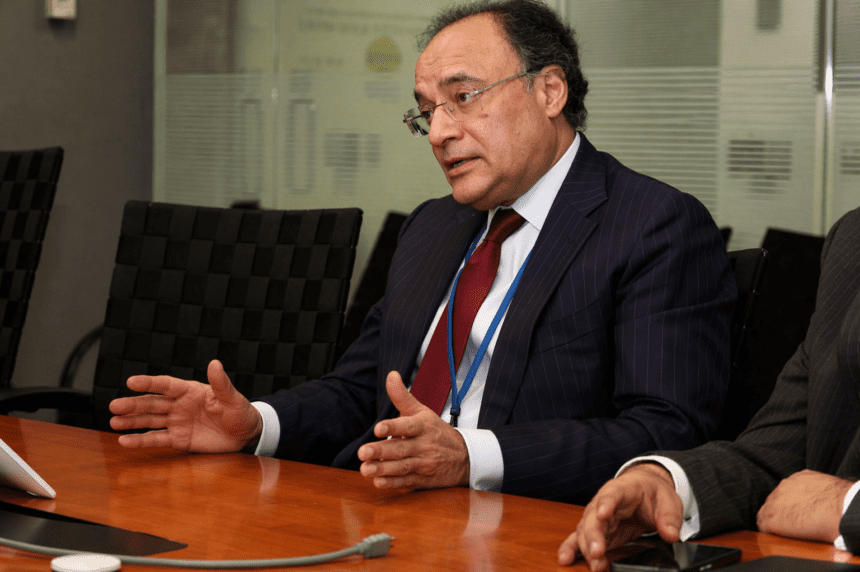
WASHINGTON, D.C. — Pakistan’s Finance Minister Muhammad Aurangzeb took part in a World Bank-hosted roundtable on digital social protection during the World Bank Group-IMF Spring Meetings 2026, using the forum to highlight Pakistan’s push for more inclusive and technology-driven welfare delivery. The Pakistani side framed the engagement as a chance to showcase the country’s government-to-person payment experience, especially through the Benazir Income Support Programme, or BISP.
The roundtable mattered for more than optics. Pakistani officials had already signaled before the meetings that social protection would be one of the country’s central talking points in Washington, with BISP presented as a working example of how cash support can be delivered at scale through digital systems. In practical terms, that means using verified beneficiary data, structured payment channels and digital tools to get money to low-income households more cleanly and, at least in theory, with fewer leakages.
Aurangzeb’s participation also fits into a wider diplomatic and economic agenda. According to Pakistan’s official announcement before the trip, he traveled to the United States to attend the Spring Meetings in Washington from April 13 to 18, 2026, with more than 50 engagements lined up with multilateral lenders, investors, policymakers and development partners. That broader schedule shows Islamabad is trying to sell two stories at once: macroeconomic stabilization on one hand, and more targeted protection for vulnerable households on the other.
At the center of that social protection pitch is BISP, Pakistan’s flagship cash support programme. The programme has increasingly been described by the World Bank as a case study in how digital technology can strengthen adaptive social protection. In a recent World Bank publication, the institution said Pakistan had improved delivery systems over time by building digital tools into registration, payments and programme management. That background gives Pakistan something fairly concrete to take into rooms like this roundtable: not just a policy promise, but a system the World Bank itself has studied in detail.
The scale is also hard to ignore. BISP said in February 2026 that it had signed an agreement with six banks to disburse funds to **9.3 million beneficiary households**, while another official BISP update said individual bank accounts would be opened for **9 million female beneficiaries**. Those figures matter because inclusion, in this context, is not only about digitization. It is also about whether poor women, who make up the backbone of BISP’s beneficiary base, can receive funds through channels that give them more control, privacy and financial access.
That emphasis on inclusion came through in parallel World Bank discussions as well. During a separate meeting in Washington, Aurangzeb and World Bank officials discussed Pakistan’s economic outlook and agreed on the need to strengthen social protection measures to cushion vulnerable groups from external shocks, including spillover risks linked to conflict in the Middle East. So the message from Pakistan wasn’t only that digital welfare systems are modern or efficient. It was that they are becoming part of the country’s economic shock-absorber toolkit.
There is a longer strategic backdrop here too. Pakistan’s ties with the World Bank have deepened under the new Country Partnership Framework, launched in January 2025 with a **$20 billion** commitment over a decade, according to Pakistani official statements and reporting at the time. That framework has become a recurring reference point in meetings between Pakistani ministers and World Bank leadership, and it gives extra weight to any conversation around social protection, human capital and resilience.
For Islamabad, then, the roundtable was a fairly neat stage. It allowed the government to connect welfare delivery, women-focused cash support, digital finance and economic reform in one setting. Whether that translates into new financing, deeper technical support or broader recognition of Pakistan’s model will depend on what comes after the meetings. But at least for now, the line Pakistan is pushing is clear: social protection is no longer being sold as a standalone safety-net programme. It is being presented as part of the country’s digital and economic ’reform story.