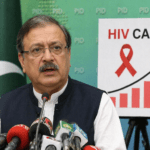
A former minister’s warning that HIV cases are rising in Pakistan lines up with the country’s latest official numbers and with broader alarms from international health agencies. Pakistan’s National Assembly was told at the end of March 2026 that 84,421 HIV cases are officially registered in the country. Pakistan’s National AIDS Control Programme says those figures are current through December 2025, and that 60,785 people are on antiretroviral therapy.
But the official count only tells part of the story. The World Health Organization’s Pakistan office said in late 2025 that Pakistan is facing a worsening HIV situation, with an estimated 0.33 million people living with HIV and many still undiagnosed. WHO said recent outbreaks have exposed children through unsafe injections and blood transfusions, and warned that testing and prevention gaps are allowing the epidemic to spread more quietly than the official registry suggests.
That is why the “cases on rise” framing has gained traction. WHO and UNAIDS said new infections in Pakistan have risen by about 200% over the past 15 years, from roughly 16,000 in 2010 to 48,000 in 2024. Recent Pakistani reporting has also said more than 10,000 people were newly detected as HIV-positive in the first nine months of 2025, pointing to what officials described as the highest annual pace yet recorded in the country.
The increase is not just a matter of adult transmission patterns. Some of the most disturbing recent reporting has involved children. WHO listed outbreaks in places including Shaheed Benazirabad, Hyderabad, Naushahro Feroze, Pathan Colony, Taunsa, Mirpur Khas, Jacobabad, Shikarpur, and Larkana, noting that in several of those outbreaks more than 80% of detected cases involved children. A BBC-reported investigation, echoed in recent coverage, found that 331 children in Taunsa, Punjab, tested HIV-positive between November 2024 and October 2025, with syringe reuse under scrutiny.
Officials say treatment is available, but the deeper problem is finding people early enough and preventing new infections in the first place. Pakistan’s AIDS control programme says it has 98 ART centers nationwide, yet WHO says only a fraction of those infected know their status, and that critical services such as prevention of mother-to-child transmission remain far too limited. That gap between registered patients and estimated real infections is what makes the trend so worrying.