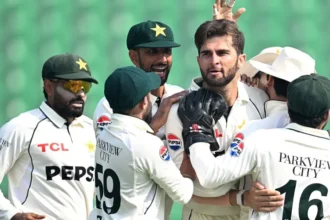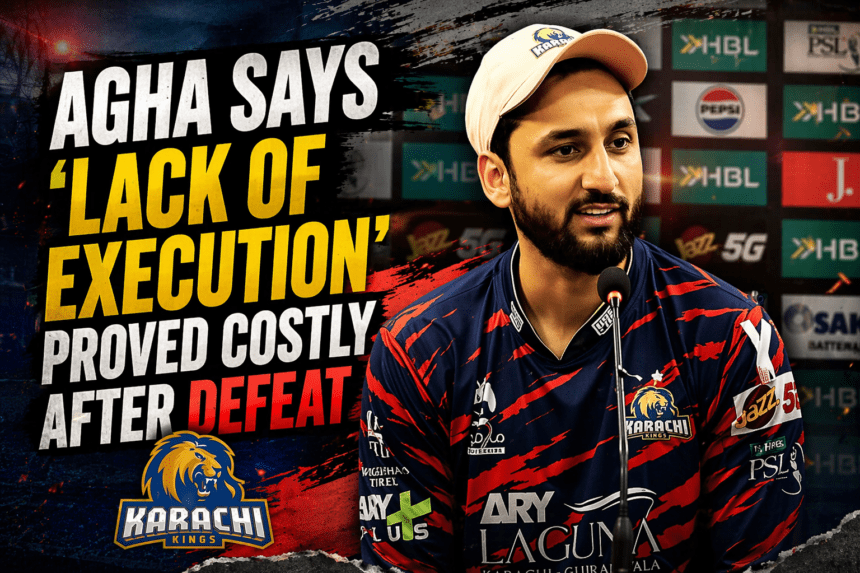
Salman Ali Agha said Pakistan paid the price for poor execution after their 61-run defeat to India in the ICC Men’s T20 World Cup 2026, a result that left his side under heavy pressure in the tournament. While your headline mentions Karachi Kings, the quote now being widely circulated is attached in current reporting to Pakistan’s loss to India in Colombo, not to a Karachi Kings PSL match.
Speaking after the game, Agha said Pakistan had not been able to carry out their plans the way they wanted. That assessment felt blunt, but fair. Pakistan had chosen a spin-heavy approach after winning the toss and bowling first, clearly believing the conditions would help them control India’s batting. Instead, India got away from them and posted the stronger total, leaving Pakistan to chase from behind almost from the start.
The phrase “lack of execution” can sound vague in post-match interviews, but here it pointed to something pretty specific. Pakistan’s plans were visible enough: use spin, slow the scoring, and squeeze India in the middle overs. The problem, according to the reporting, was that those plans did not translate into the kind of disciplined bowling and pressure Pakistan had hoped for. On a day built around tactics, the basics still mattered more.
Agha’s reaction also fit the larger mood around Pakistan’s T20 World Cup campaign. ESPNcricinfo’s later coverage quoted him reflecting more broadly that Pakistan had underperformed in the tournament and that their decision-making under pressure was not good enough. So this was not just frustration over one bad evening. It was part of a wider admission that the team had not held up well when the big moments arrived.
That is what made the India defeat sting even more. Matches between these two sides always carry weight, but this one came with the added feeling that Pakistan had gone in with a clear idea and still failed to make it work. Agha did not hide behind excuses. The reporting presents him as accepting that execution, not intent, was the real issue. In cricket, that is often the hardest thing to admit, because it suggests the problem was not the plan on paper but the inability to deliver it where it mattered.
For Pakistan, the consequence was immediate: a heavy defeat, more scrutiny on the captain, and renewed debate over selection, tactics, and whether the side was equipped to handle pressure at the top level. For Agha, the quote has stuck because it captures the defeat neatly. Pakistan did not look short of ideas. They looked short of control.
If you want, I can also rewrite this into a Karachi Kings-specific article once you share the exact match, because the available reporting ties this quote to Pakistan vs India, not a PSL defeat.