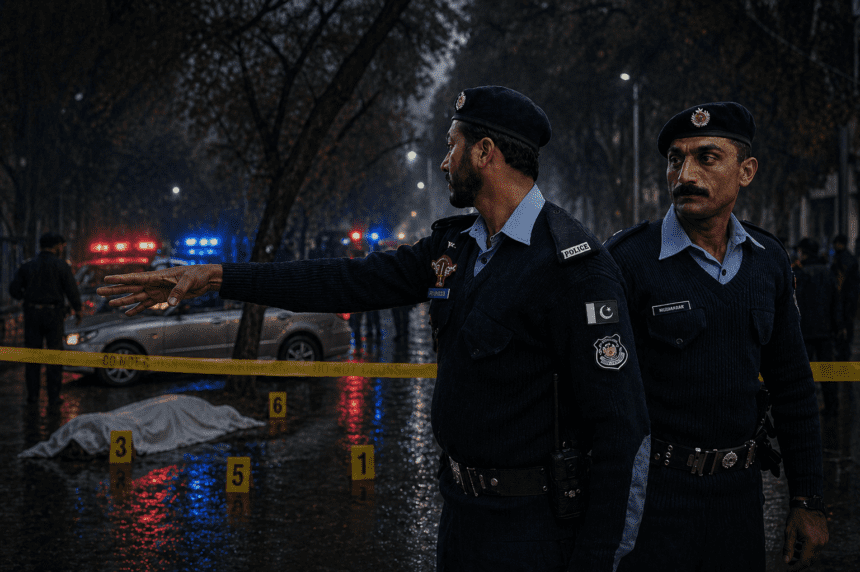
Islamabad has once again come under serious concern after police records showed that six murder cases were reported across the capital in the past week, alongside a wider rise in street crime. The weekly tally also included 23 vehicle theft cases, five snatching incidents, 11 other reported crimes and two suicides, adding to fears about law and order in a city that is expected to be one of the country’s most secure urban centres.
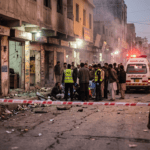
What has disturbed residents the most is one particularly brutal case in the Noon police station area, where four members of a family were found shot dead inside a house in Jhangi Syedan, on the outskirts of the capital near sectors I-15 and I-18. Initial police findings suggested the victims included two men, a woman and a teenager, while investigators began examining whether the killings were linked to a domestic or family dispute.
The family was said to have roots in Swat, and police were trying to reconstruct the chain of events that led to the attack. Some reports identified the main victim as Habib-ur-Rehman, who had reportedly been living in the rented house with relatives for several years. Investigators were reviewing forensic evidence, witness statements and CCTV footage, while also tracing individuals connected to the household. Officials had not publicly confirmed a final motive.
The wider concern is that this incident does not appear to be an isolated one. The latest weekly crime data suggests Islamabad is facing a more persistent pattern of violence and insecurity, with killings reported in different localities and routine incidents of vehicle theft and street snatching continuing to unsettle residents.
For a capital city where checkpoints, patrols and surveillance are already part of everyday life, the figures are hard to dismiss. Six murder cases in a single week is not just another entry in police records. It is the kind of number that sharply deepens public anxiety, especially when one of those cases involves the killing of an entire family within the limits of a police station’s jurisdiction.
Questions are now likely to grow over police response, intelligence gathering and whether visible security measures in Islamabad are actually preventing serious crime. The investigation into the family killings is still underway, and the case may become a major test of how firmly authorities respond to the capital’s latest surge in violent crime.