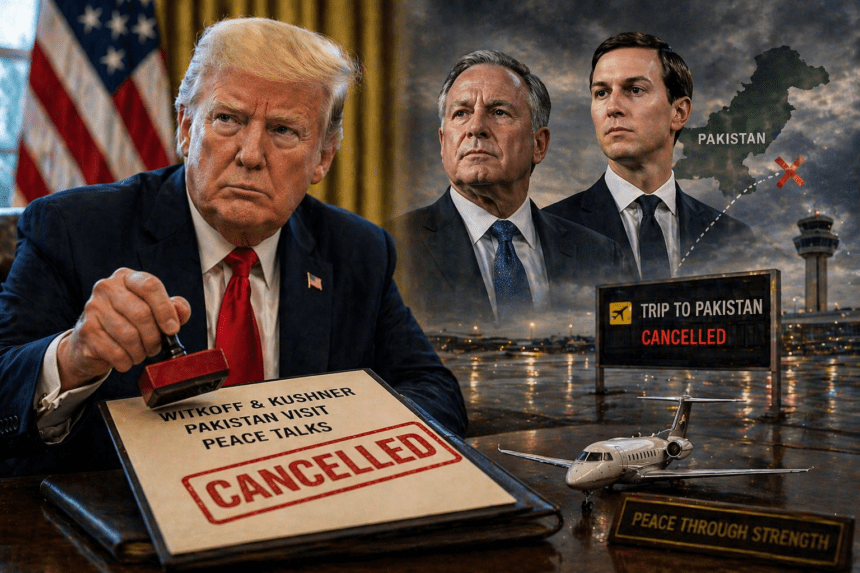
President Donald Trump has called off a planned trip by special envoy Steve Witkoff and senior adviser Jared Kushner to Pakistan for another round of talks with Iran, abruptly stalling a diplomatic push that had been billed as a possible step toward easing tensions. The trip had been expected to bring U.S. officials to Islamabad for Pakistan-hosted discussions with Iranian representatives.
The talks were not peace talks “for Pakistan.” They were talks in Pakistan and with Iran, with Islamabad serving as the venue and mediator. Recent coverage says the White House had publicly indicated that Witkoff and Kushner would travel there, but Trump reversed course before the visit went ahead.
Trump said he canceled the trip because too much time would be lost in travel and because, in his view, Iran’s leadership was too divided and unclear to make meaningful progress. Other reports said he also argued that Tehran could reach out directly if it genuinely wanted a deal, signaling frustration with the pace and structure of the diplomacy.
That decision lands at a sensitive moment. Earlier rounds of Pakistan-mediated contact had raised hopes that direct or near-direct engagement might produce movement on a ceasefire framework and broader U.S.-Iran understandings. But the latest reporting suggests those expectations have run into the same obstacles that have shadowed the process from the start: mistrust, competing demands, and uncertainty over who in Tehran is empowered to negotiate.
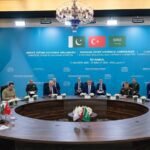
Pakistan’s role has drawn unusual attention in the process. Islamabad has been trying to position itself as a useful intermediary, offering neutral ground for a conversation that neither Washington nor Tehran appears ready to abandon completely. Even so, the cancellation is a setback for that effort, at least for now, because it removes the immediate chance for another in-person encounter at a moment when diplomacy was already looking fragile.
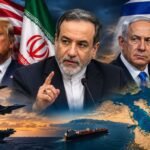
The broader stakes go beyond one canceled trip. Diplomatic uncertainty around the U.S.-Iran track has fed concern about regional stability and energy markets, especially with continued tension around the Strait of Hormuz. That means a scheduling decision in Washington is not just a travel story. It is being read as another sign that the negotiating channel remains open in theory, but shaky in practice.
For now, the message from Trump is blunt: the United States is not prepared to keep chasing a format it sees as unproductive. Whether that pressure forces movement from Iran or deepens the deadlock is still unclear. What is clear is that the Pakistan leg of the talks, at least this round, is off.