By using this site, you agree to the Privacy Policy and Terms of Use.
Accept
Media HydeMedia Hyde
  • Home
  • Politics
  • Education
  • Entertainment
  • Sports
  • Blogs
  • Business & Commerce
  • Others
    • Religious
    • Metropolitan
    • Climate and Weather
Font ResizerAa
Media HydeMedia Hyde
Font ResizerAa
  • Home
  • Politics
  • Education
  • Entertainment
  • Sports
  • Blogs
  • Business & Commerce
  • Others
    • Religious
    • Metropolitan
    • Climate and Weather
Follow US
© 2026 Media Hyde Network. All Rights Reserved.
information

NASA’s latest look at the Eye of the Sahara reveals its true origins

Last updated: April 28, 2026 12:34 am
Amna Iqbal
Share
SHARE

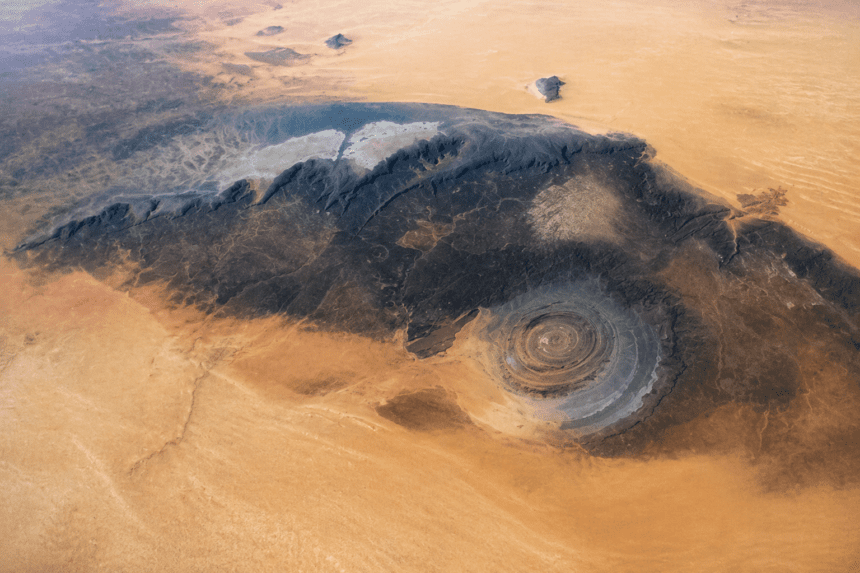
The Richat Structure, better known as the Eye of the Sahara, spans 25 miles across the Mauritanian desert. Seen from space, it looks like a bullseye etched into the sand. For decades, observers speculated it was an impact crater from a meteorite, but NASA’s satellite imaging has finally put that theory to rest.

It’s not a crater. It’s a geologic uplift.

The formation is actually a deeply eroded dome. Millions of years ago, molten rock pushed upward toward the Earth’s surface but failed to break through. This created a pressurized dome of sedimentary rock layers. Over time, erosion stripped away the top, exposing the concentric rings of igneous and sedimentary rock that give the formation its distinctive appearance.

Why does it look so perfect? The rings consist of different types of rock that erode at different rates. Resistant quartzites form the high ridges, while softer rocks wear away into valleys, creating the stark contrast visible from orbit.

Geologists have moved past the “meteorite” hypothesis because the structure lacks the telltale signs of an impact—there’s no evidence of shocked quartz or high-pressure mineral alterations that occur when a celestial body slams into the crust. Instead, the Eye is a testament to the slow, patient work of wind and water.

The structure sits in the Sahara, but it wasn’t always this dry. Paleoclimatic data suggests the region was once lush and wet, allowing water to carve the structure into the intricate, circular patterns we see today.

While researchers continue to study the site to understand the specific volcanic activity that pushed the dome upward, the consensus is clear. The Eye of the Sahara isn’t a scar from space; it’s a rare look at the Earth’s own internal pressure, laid bare by the relentless erosion of time.


Share This Article
Email Copy Link Print
Previous Article Four of Mumbai family die after suspected food poisoning
Leave a Comment

Leave a Reply Cancel reply

Your email address will not be published. Required fields are marked *

Sponsored Ads

Stay Connected

FacebookLike
XFollow
InstagramFollow
YoutubeSubscribe
WhatsAppFollow
ThreadsFollow
Four of Mumbai family die after suspected food poisoning
Health
April 28, 2026
Iran Prioritizes Strait of Hormuz Over Nuclear Talks in New Proposal
international
April 28, 2026
Rising Cases of HIV in the Country Reach Parliament
Health
April 28, 2026
Outstanding Services in Cardiology, Chinese Professor Awarded Sitara-e-Pakistan
Health
April 28, 2026
Growing Population is a Major Challenge for the Healthcare System: Mustafa Kamal
Health
April 28, 2026
White House orders security review following Trump assassination attempt
international
April 28, 2026
Media Hyde Media Hyde Dark
Facebook Twitter Youtube Rss Medium

About US

Media Hyde Network: Your instant connection to breaking stories and live updates. Stay informed with our real-time coverage across politics, tech, entertainment, and more. Your reliable source for 24/7 News.

Top Categories
  • Headline
  • Politics
  • Entertainment
  • Education
  • Sports
  • Religious
  • Metropolitan
  • Climate and Weather
Usefull Links
  • Contact Us
  • Disclaimer
  • Privacy Policy
  • Cookies Policy
  • Advertising Policy
  • Terms & Conditions

© 2025 Media Hyde Network. All Rights Reserved.

Welcome Back!

Sign in to your account

Username or Email Address
Password

Lost your password?