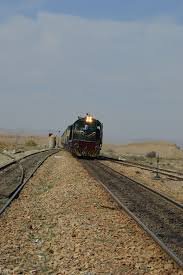
QUETTA — For the passengers aboard the Jaffer Express, the 1,000-kilometer crawl from Quetta to Peshawar is less of a transit and more of a gamble. The train, once a symbol of connectivity between Balochistan and the rest of Pakistan, now serves as a stark reminder of the crumbling state of the country’s railway infrastructure.
The journey begins with the familiar mechanical groans of aging locomotives. These engines, many of which have long surpassed their intended operational lifespans, frequently break down in the desolate stretches of the Bolan Pass. When the power fails, the carriages become ovens. There is no air conditioning, no backup power, and often, no clear communication from the crew.
“You don’t buy a ticket for a seat,” says Rahimullah, a regular commuter who travels between Quetta and Rawalpindi for work. “You buy it for the hope that the wheels keep turning. Last month, we sat in the middle of nowhere for six hours. No water. No shade. Just the desert heat.”
The systemic neglect is visible in every carriage. Broken window panes are stuffed with rags, seat upholstery is shredded to the springs, and the sanitation systems are largely non-functional. These aren’t minor inconveniences; they are health hazards. For a journey that officially takes over 25 hours—though delays often push it well beyond 30—the lack of basic facilities turns a standard commute into an endurance test.
Railway officials point to a lack of funding and the high cost of imported spare parts as the primary drivers of the decline. Yet, for the thousands who rely on this route because they cannot afford airfare, these bureaucratic justifications offer little comfort. The Jaffer Express is the lifeline for the working class, yet it is treated as an afterthought in the national budget.
Safety remains the most pressing concern. Derailments and track failures have become recurring headlines, often blamed on outdated signaling systems and poorly maintained tracks. The recent history of the route is marked by frequent closures due to security threats and infrastructure damage, leaving passengers stranded in regions where they have little support.
The Ministry of Railways has promised upgrades for years, citing potential investments under the China-Pakistan Economic Corridor (CPEC) framework. Despite these promises, the reality on the ground remains unchanged. The trains are slower, the tracks are more fragile, and the passengers are more frustrated.
As the Jaffer Express pulls away from the platform in Quetta, the passengers settling into their seats aren’t looking for luxury. They are simply hoping that for the next 30 hours, the train doesn’t become the next headline in the morning paper.