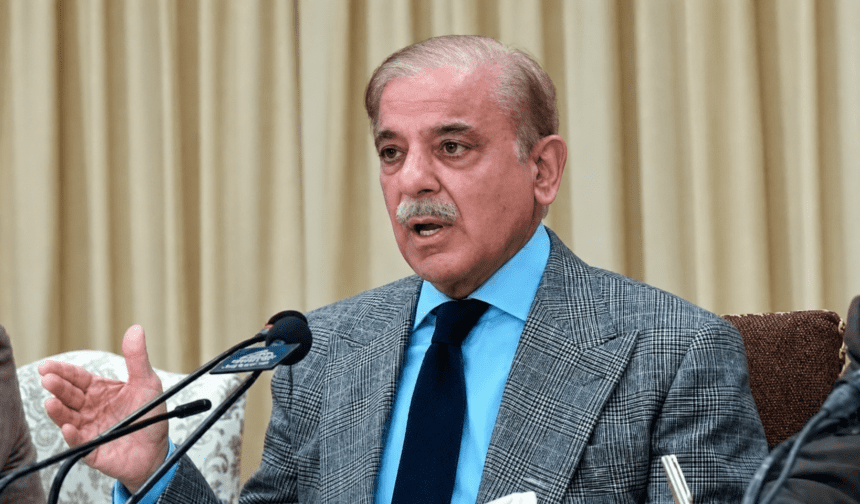
LAHORE: Prime Minister Shehbaz Sharif on Saturday called for wider use of modern technology in Pakistan’s energy sector and ordered faster promotion of renewable power projects, saying the country has to move more decisively if it wants to tackle electricity shortages and bring long-term stability to the system. The remarks came during a meeting in Lahore focused on power-sector reforms, where the prime minister also stressed better transmission, lower losses and easier digital payment systems for electricity consumers.
The direction fits into a broader policy push that has gathered pace in recent days. On May 1, the government said it was shifting from immediate tariff relief toward deeper structural reform, with Sharif reviewing the Integrated Generation Capacity Expansion Plan for 2024–2034 and backing a strategy built around affordability, reliability and lower-cost generation. Officials said the revised plan removes 7,967 megawatts of expensive projects from the pipeline and could save about $17 billion, or Rs4,743 billion, over time.
That matters because Pakistan’s power problem isn’t just about producing electricity. It’s also about what kind of electricity is produced, how much it costs, and whether the grid can carry it efficiently. The revised plan, according to official reporting, gives more weight to indigenous and alternative sources including solar, hydropower and nuclear energy, while gradually reducing dependence on imported fuels that have long driven up costs and pressure on foreign exchange reserves.
Sharif has been making that case more openly in recent weeks. At another review meeting in April, he said renewable energy had already helped Pakistan avoid a deeper crunch during regional oil-supply disruptions and instructed officials to prepare a broader national strategy for expanding clean power. That line is now showing up again, more forcefully, in the government’s message: renewables are no longer being pitched only as a climate choice, but as an economic and energy-security necessity.
There is, though, a harder reality in the background. Pakistan’s electricity system has been under strain for years because of costly generation contracts, transmission bottlenecks, distribution losses and chronic circular debt. So even as the government talks up solar and other renewable projects, the success of that shift will depend on whether the grid, market rules and payment structure are fixed alongside it. The prime minister’s emphasis on technology and digitalisation suggests the government knows that building new plants alone won’t solve the problem.
For now, the political message is pretty clear: lower tariffs may win immediate relief, but Islamabad wants the next phase to look bigger than a temporary cut in bills. It wants a power system that is cheaper, cleaner and, ideally, less fragile than the one Pakistan has lived with for years. Whether that ambition survives the usual delays and institutional resistance is another question. But in Lahore on Saturday, Sharif left little doubt about the direction he wants.