ISLAMABAD: Pakistan is deepening energy coordination with Saudi Arabia as it considers building strategic petroleum reserves, a move driven by fresh concerns over supply disruptions and the country’s thin emergency fuel cushion. The push has gathered pace after Pakistan’s petroleum ministry formally sought an alternative crude supply route through Saudi Arabia’s Red Sea port of Yanbu, while officials in Islamabad also moved to prepare a longer-term reserves plan.
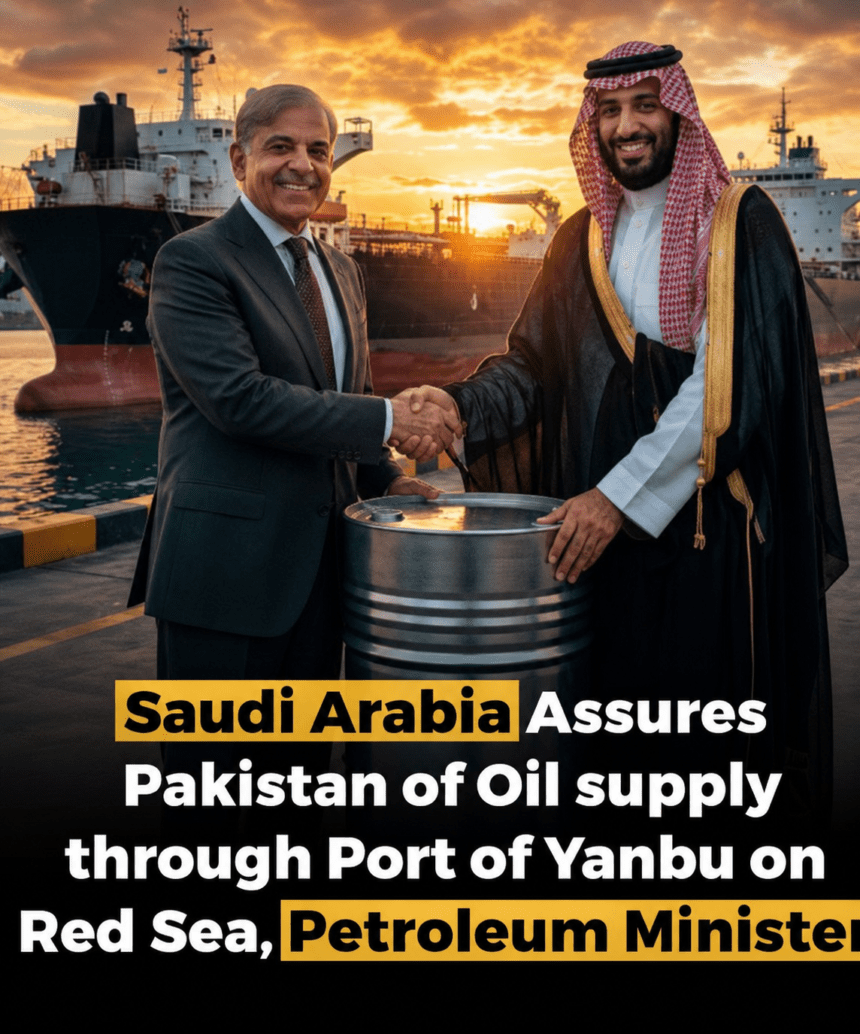
The Saudi connection is not a vague diplomatic gesture. In a March 4, 2026 press release, Pakistan’s Petroleum Division said Petroleum Minister Ali Pervaiz Malik met Saudi ambassador Nawaf bin Said Al-Malki and requested an alternative route via Yanbu after disruption risks tied to the Strait of Hormuz. According to the ministry, the Saudi side assured full support, and Pakistan said one crude vessel had been secured for dispatch through that channel.
That matters because Pakistan remains heavily exposed to external shocks. Recent reporting citing the petroleum minister said the country does not yet have strategic oil reserves on the scale seen in some larger regional economies, and that available stocks cover only about five to seven days. Separate reporting on the government’s new reserves initiative said Pakistan’s broader fuel cover is currently estimated at roughly 24 to 28 days, underlining the gap between routine commercial inventories and a true emergency buffer.
The government now appears to be trying to close that gap. Reporting in late April said Islamabad had initiated work on Strategic Petroleum Reserves aimed at building a buffer of up to 90 days, with a high-level committee asked to submit recommendations in early May. That would be a significant policy shift for a country that has long relied on regular imports and short-cycle stock management rather than large, state-backed emergency storage.
Behind the urgency is the simple geography of oil trade. The Strait of Hormuz has long been one of the world’s most critical energy chokepoints, and the IEA said in its April 2026 market reporting that flows through the waterway had collapsed during the regional conflict, contributing to what it described as an unprecedented supply shock. A detour through Yanbu does not remove Pakistan’s dependence on imported crude, but it does give policymakers a fallback route at a moment when energy security is no longer just an economic issue; it is a strategic one.
There is also a broader political layer here. Pakistan and Saudi Arabia have been expanding cooperation across energy and minerals, and the latest Saudi state media joint statement following Prime Minister Shehbaz Sharif’s visit signaled that the relationship is being framed increasingly in strategic terms. In that context, oil security is becoming part of a wider bilateral partnership rather than a stand-alone emergency discussion.
Still, the hard part comes next. Building strategic reserves is expensive, slow, and infrastructure-heavy. Tanks have to be built or repurposed, financing has to be arranged, and the state has to decide how much crude or refined product it can realistically hold without putting further pressure on already strained public finances. So the Saudi route may offer immediate breathing room, but the bigger test for Islamabad is whether it can turn a reactive crisis measure into a durable energy-security policy.