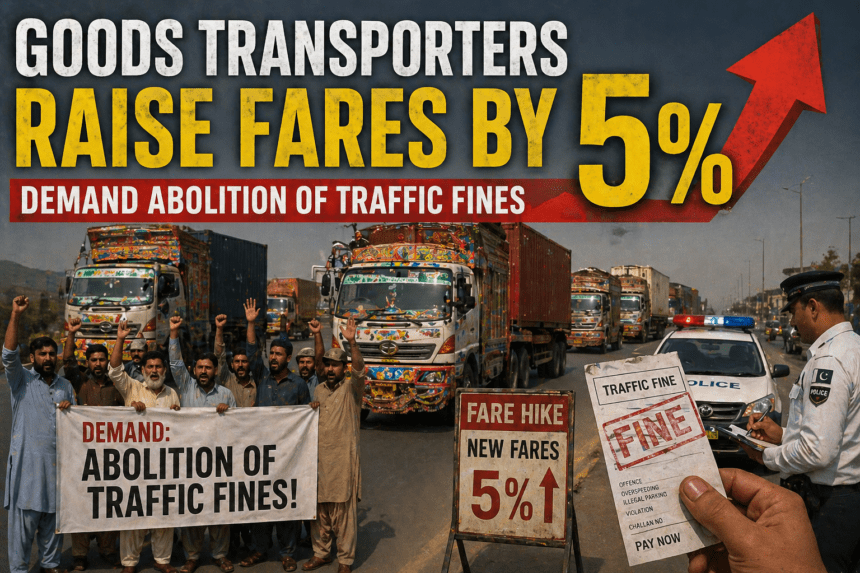
Goods transporters in Pakistan have raised freight fares by 5% and renewed demands for the abolition or rollback of what they call excessive traffic fines, arguing that higher fuel costs and punitive enforcement are making operations increasingly difficult. Recent local reporting said transport bodies linked the fare move to the latest petroleum price increase, while also pressing authorities to revisit penalties they say have become financially unbearable for drivers and fleet owners.
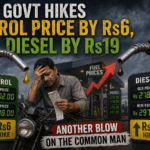
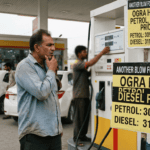
The immediate trigger for the new fare pressure appears to be fuel. Sources reported on April 25, 2026, that the Pakistan Goods Transport Alliance increased freight charges after a rise in petroleum prices, noting diesel at Rs380.19 per litre and petrol at Rs393.35 per litre. The same report said public transport fares were increased by 5%, while freight charges were raised by 10%, underscoring how sharply transport operators say fuel costs are feeding into day-to-day business decisions.
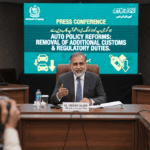
At the same time, the argument from transporters goes beyond diesel prices. Their leadership has for months been pressing the government to scrap or sharply reduce heavy traffic fines, ease axle-load restrictions and address complaints involving licensing, customs and motorway policing. Sources reported during an earlier nationwide freight strike that transport representatives said authorities had agreed to substantially reduce fines and resolve related disputes after prolonged negotiations.
That dispute was tied in large part to Punjab’s amended traffic regime. Multiple reports said transporters opposed provisions of the Punjab Motor Vehicles (Amendment) Ordinance 2025, arguing that the new structure imposed steep fines and added pressure on a sector already dealing with rising operating expenses. In some areas, transporter groups described the penalties not as routine regulation but as a direct threat to their ability to keep vehicles on the road profitably.
The broader concern for businesses is the knock-on effect. Freight fare increases usually move quickly through the supply chain, pushing up delivery costs for traders, wholesalers and eventually consumers. When transporters combine fare hikes with threats of strike action over enforcement and regulation, the disruption can spread well beyond the trucking sector. Reporting on earlier protests said industry representatives warned of major economic losses if goods movement remained suspended.
For now, the latest development captures the same tension that has been building for months: transporters say they are being squeezed from both sides, by rising fuel prices on one hand and strict fines on the other. The government, meanwhile, faces a familiar balancing act — maintaining road safety and enforcement without triggering another cycle of freight disruption and higher prices across the market.