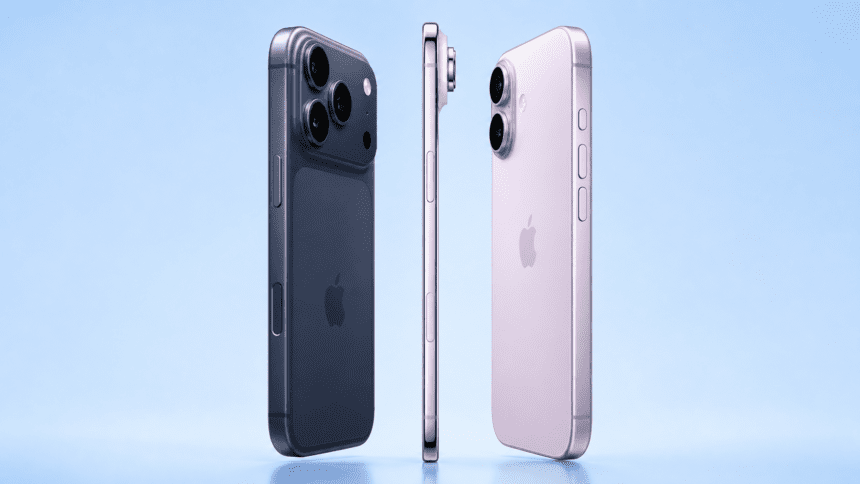
Apple says the iPhone 17 family has turned into the most popular iPhone lineup in the company’s history, a claim that came as the tech giant posted one of its strongest March-quarter performances on record. In results released on April 30, Apple reported fiscal second-quarter revenue of $111.2 billion, up 17 percent from a year earlier, while diluted earnings per share rose 22 percent to $2.01. The company also said it set March-quarter records for total revenue, iPhone revenue and earnings per share.
The iPhone was, again, the main engine. Apple booked $56.99 billion in iPhone revenue for the quarter ended March 28, 2026, a jump that executives tied directly to demand for the iPhone 17 range. Chief executive Tim Cook described the response as “extraordinary,” saying the latest models helped deliver double-digit growth across every geographic segment.
The headline-grabbing line came from Apple finance chief Kevan Parekh, who said the “iPhone 17 family is now the most popular line-up in our history” and added that Apple believes it gained smartphone market share during the quarter. That’s a big statement. But there’s a catch: Apple has not publicly spelled out the exact metric behind “most popular,” whether that means unit sales, mix, upgrade rate, revenue contribution, or some broader internal measure. So while the company is clearly signaling strong momentum, the claim still comes with some unanswered questions.
Even so, the broader numbers give Apple plenty to boast about. Services revenue climbed to a record $30.98 billion, while the March quarter became Apple’s best ever for that period. The company also announced a 4 percent dividend increase to $0.27 per share and authorized an additional $100 billion for share repurchases, moves meant to underline confidence after the stronger-than-expected quarter.
The results matter for another reason too. Apple has spent much of the past year facing investor questions about how quickly it can sharpen its artificial-intelligence strategy, especially as rivals push harder on AI features in smartphones and software. Strong iPhone 17 demand does not erase those concerns, but it does buy Apple some breathing room. For now, the company has managed to remind the market of something simple: when a new iPhone cycle lands well, it still moves the whole business.
There are still loose ends. Reports following the earnings release noted that analysts had expected iPhone revenue in roughly the same range, and some coverage pointed out that Apple’s description of the iPhone 17 lineup as its “most popular” was unusually broad without a firm public benchmark attached. That ambiguity will probably linger until Apple shares more detail, if it ever does. But on the evidence available right now, the message from Cupertino is pretty clear: the iPhone 17 cycle is hitting hard, and Apple wants everyone to know it.