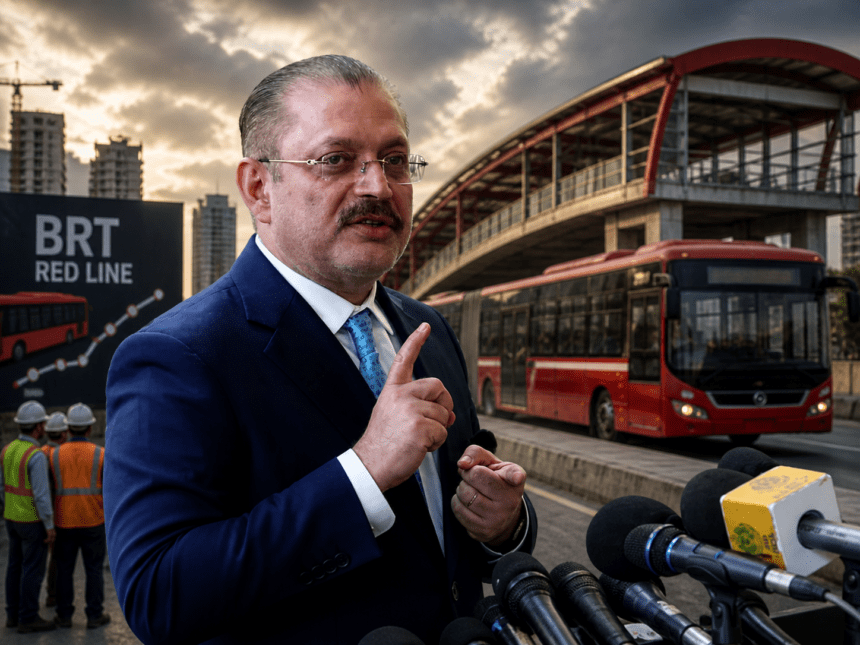
Karachi’s Red Line Bus Rapid Transit (BRT) project is a “very tough” undertaking, Sindh’s Senior Minister Sharjeel Inam Memon said Tuesday, pushing back against mounting criticism over the project’s sluggish progress. Memon dismissed claims of government-induced delays, pointing instead to the immense technical complexity of the 26-kilometer corridor.
The project, which aims to connect Model Colony to Numaish Chowrangi, has become a flashpoint for Karachi commuters frustrated by years of gridlock, dust, and stalled construction. “It is a complex project,” Memon told reporters, characterizing the work as a massive engineering challenge rather than a simple road widening.
He insisted the provincial government remains committed to the timeline, even as ground realities suggest otherwise for thousands of daily travelers. The Red Line is unique among Karachi’s transit plans. It relies on a biogas-powered fleet and involves extensive utility relocation—a process that has repeatedly snarled progress.
Beneath the surface, aging water and sewage lines require complete overhauls before the bus lanes can be finalized. These hidden infrastructure failures have often forced contractors to stop, wait, and redesign, adding months to the original schedule. Critics, however, argue that the “complexity” narrative is a convenient shield for administrative mismanagement.
Local business owners along the University Road corridor have seen foot traffic crater as construction barriers remain in place far longer than promised. For these stakeholders, the technical excuses offer little relief from the economic strain.
Memon’s defense comes at a time when the Sindh government is under pressure to show tangible results for the multi-billion rupee investment. With the project’s completion date having already shifted multiple times, the public’s patience is thinning.
The minister’s insistence that the government isn’t to blame for the delays might satisfy the record, but for Karachiites stuck in hours of traffic every day, the distinction between “technical complexity” and “administrative failure” is becoming increasingly irrelevant. The project remains a race against time—and, for now, the traffic isn’t winning.