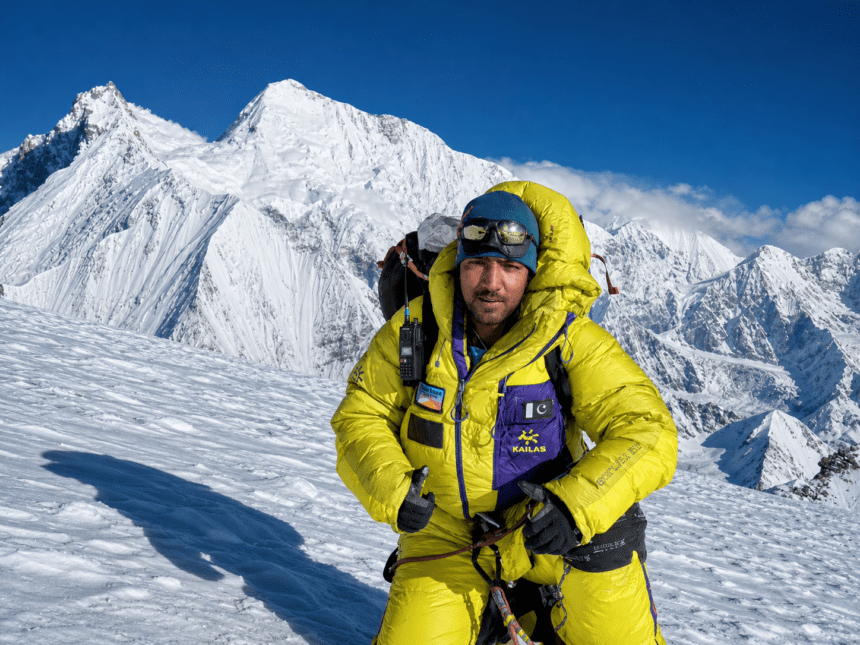
Pakistani mountaineer Sajid Ali Sadpara has summited Mount Makalu, the world’s fifth-highest peak at 8,485 metres, without supplementary oxygen, according to expedition organisers. If confirmed in full season records, the climb would add another major chapter to Sadpara’s already exceptional run on the world’s highest mountains. Makalu, straddling the Nepal-Tibet border, is widely regarded as one of the more technically demanding 8,000-metre peaks because of its exposed ridges, steep sections and punishing weather.
For Sadpara, this is about more than one summit. It sits inside a much bigger mission: climbing all 14 of the world’s 8,000-metre peaks without bottled oxygen, a goal he has spoken about for years as both a sporting challenge and a deeply personal tribute to his late father, legendary Pakistani climber Mohammad Ali Sadpara.
The younger Sadpara has been building that record steadily, and in a style that has earned real respect in the mountaineering world. In recent seasons he has climbed Annapurna without supplemental oxygen, becoming the first Pakistani to do so, and later made headlines again after summiting Everest without oxygen or Sherpa support. He also climbed Nanga Parbat and Broad Peak without bottled oxygen, reinforcing his reputation as one of Pakistan’s strongest high-altitude climbers.
His most recent widely reported major success came on Dhaulagiri in May 2025, when Pakistani and regional media, citing the Alpine Club of Pakistan and expedition operators, said he reached the 8,167-metre summit without supplemental oxygen or porter support. That ascent was described as his ninth successful climb of an 8,000-metre peak, with five remaining in his broader quest at that point.
That context matters. Pakistani climbing has produced some extraordinary names, but few stories carry the same emotional pull. Sajid survived the 2021 K2 winter expedition in which his father, Mohammad Ali Sadpara, along with John Snorri and Juan Pablo Mohr, was lost on the mountain. Ever since, his climbs have carried an extra layer of meaning — not just medals-and-records stuff, but something closer to unfinished family business.
A Makalu summit without oxygen would strengthen that legacy even further. It would also underline how far Sadpara has pushed himself in alpine-style, high-risk climbing, where there’s very little margin for error once a climber moves above 8,000 metres into the so-called death zone. On mountains like Makalu, where the terrain is harsh and the weather can turn quickly, doing it without bottled oxygen is not just impressive — it’s elite, full stop.
For Pakistan’s mountaineering community, the climb is another moment of pride at a time when local climbers have increasingly forced their way into the global conversation. Sadpara’s progress has been followed closely not only because of his surname, but because his results now stand on their own. He is no longer simply carrying a legacy. He’s building one.