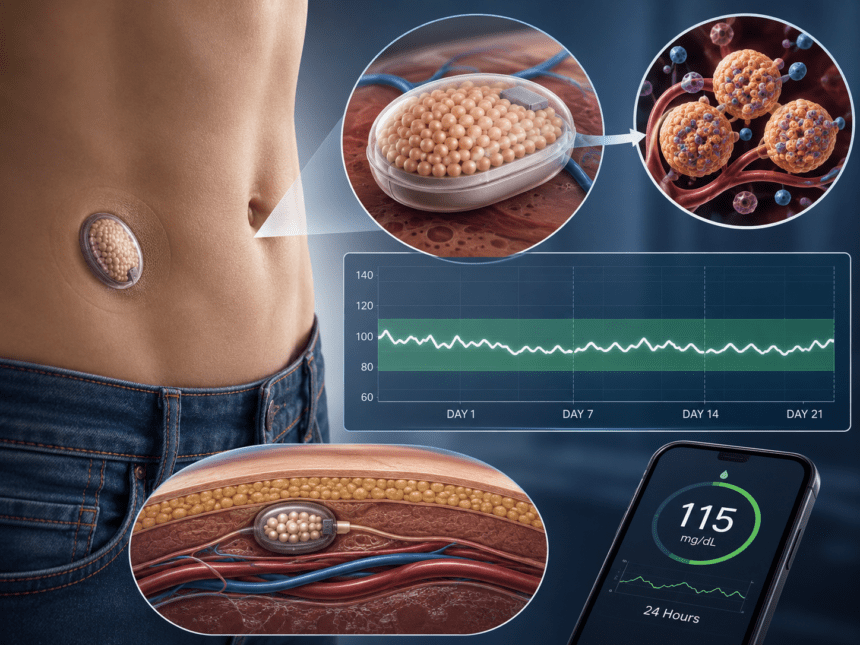
Patients with type 1 diabetes may soon have an alternative to daily insulin injections. Researchers have successfully tested an implantable device that houses insulin-producing islet cells, maintaining stable glucose levels for weeks in preclinical models.
The device a small, porous capsule acts as a protective shield for transplanted pancreatic islet cells. By shielding these cells from the body’s immune system, the implant allows them to function normally without the need for systemic immunosuppressive drugs.
This has long been the primary hurdle in islet transplantation; historically, the body attacks foreign cells, forcing patients onto harsh medication regimens that carry their own set of risks. The breakthrough lies in the capsule’s specialized membrane.
It permits the free flow of oxygen and nutrients while keeping immune cells at bay. In recent tests, the device provided a consistent, autonomous response to glucose fluctuations.
When blood sugar rose, the islet cells detected the change and released insulin; when levels dropped, they throttled back. This “closed-loop” biological system mimics a healthy pancreas more closely than any external pump currently on the market.
“The goal isn’t just to manage the disease, but to effectively put the pancreas back to work,” said a lead researcher familiar with the study.
“We’ve seen sustained function for over a month in trials, which is a significant leap from previous iterations that failed within days.” While the results are promising, the transition to human patients remains the next major challenge.
The research team is currently refining the device’s size and durability to ensure it can withstand the body’s internal environment for longer periods without becoming obstructed by scar tissue a common failure point for previous implants.
Regulatory hurdles and long-term safety monitoring are still ahead. If clinical trials replicate these results, the device could offer a semi-permanent solution for millions, shifting the standard of care from reactive insulin management to a biological, self-regulating system.
For now, the team is focused on extending the implant’s operational window. They aren’t looking to replace the patient’s pancreas forever, but they are looking to change how the world treats type 1 diabetes one implant at a time.