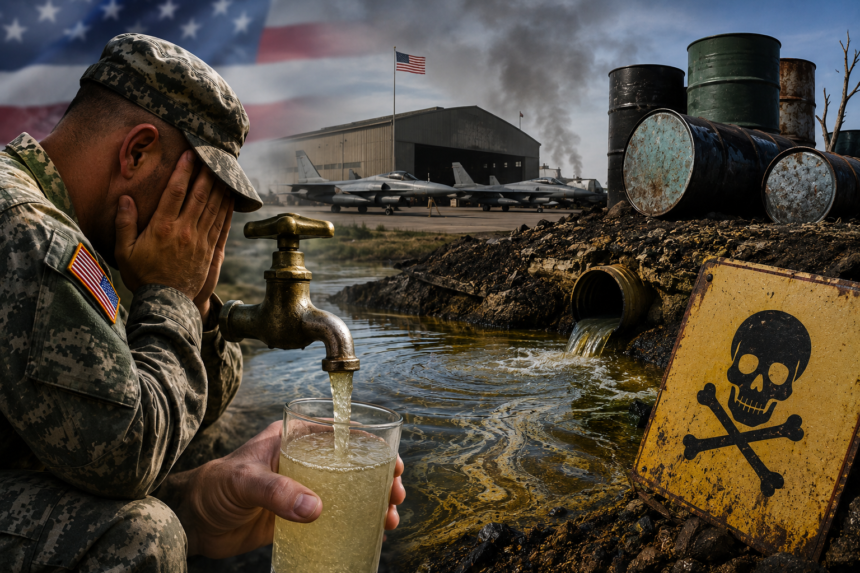
The United States is facing growing pressure to address chemical pollution linked to military bases, as communities near defense installations continue to report contamination of drinking water, groundwater, soil, farms, and nearby ecosystems.
At the center of the issue are PFAS, a group of long-lasting chemicals often called “forever chemicals” because they can remain in the environment for years. These chemicals were widely used in firefighting foam at military bases during training and emergency response activities. Over time, the foam seeped into the ground and water systems around several installations.
According to the U.S. Department of Defense, hundreds of active military installations, former defense sites, National Guard facilities, and other defense-related locations have been identified for PFAS investigation or cleanup. The department says it had identified 723 locations for assessment as of March 31, 2025.
Health and environmental concerns have increased because PFAS exposure has been linked to serious health risks, including certain cancers, immune system problems, developmental effects, and other long-term health issues. In 2024, the U.S. Environmental Protection Agency set legally enforceable drinking-water limits for several PFAS compounds, including PFOA and PFOS at 4 parts per trillion.
The issue has triggered lawsuits, public anger, and calls for accountability in several states. In New Mexico, state officials have accused the U.S. Air Force of failing to properly address contamination linked to Cannon Air Force Base, where polluted water reportedly affected farms, wells, and livestock.
Similar concerns have been raised near other military sites, including former Wurtsmith Air Force Base in Michigan, where groundwater treatment systems were planned to control PFAS contamination and prevent further spread into nearby waterways.
Environmental groups and affected residents say cleanup has been too slow, while many communities remain worried about long-term exposure and medical consequences. Some families living near contaminated sites have demanded health monitoring, clean drinking water, compensation, and faster removal of polluted soil and groundwater.
The cleanup challenge is massive. PFAS chemicals are difficult and expensive to remove, and contaminated plumes can spread far beyond base boundaries. Experts say the problem may take years, or even decades, to fully address.
The debate has also become political. While health advocates argue that strict federal rules are needed to protect public water supplies, some officials and industry groups have raised concerns over the cost and complexity of meeting new standards. Recent reporting also indicates that federal PFAS drinking-water rules have become the subject of renewed political debate in Washington.
For affected communities, however, the issue remains deeply personal. Many residents say they served, worked, or lived near military installations without knowing their water may have been contaminated. Now, they are demanding answers from the federal government and a faster cleanup response.
The growing scrutiny marks a major environmental reckoning for the U.S. military, as the country confronts the long-term consequences of decades of chemical use at defense facilities.