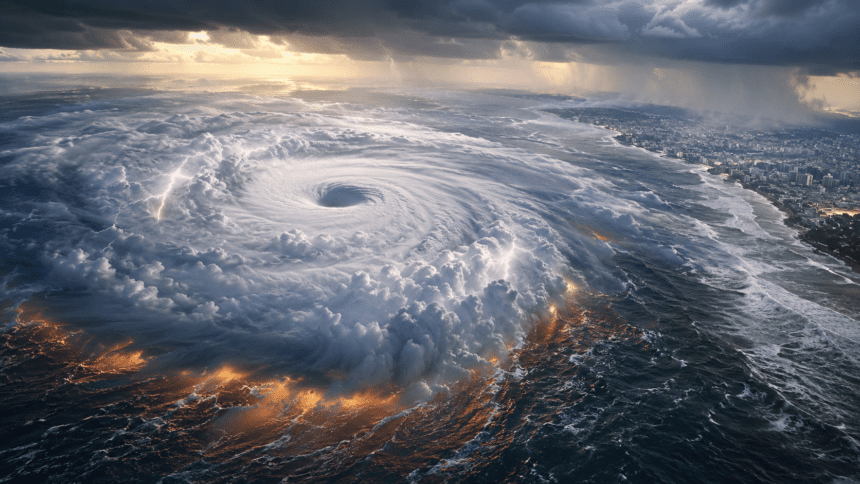
A hurricane doesn’t just happen. It’s an engine, and it needs specific fuel to run. Warm ocean water—at least 80 degrees Fahrenheit—provides the heat energy, while moist air and converging winds create the rotation. When these elements align, they form a low-pressure system that begins to spin. As the storm pulls in more moisture, it releases latent heat through condensation, effectively turning the ocean’s warmth into a massive, rotating vortex of wind and rain.
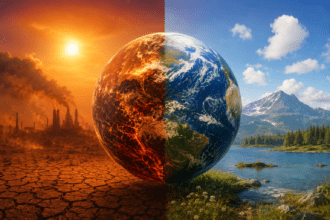
The question isn’t just how they form, but why they’re hitting harder. Climate change is fundamentally altering the environment where these storms are born.
Sea surface temperatures have climbed steadily over the past century. Because warmer water holds more energy, it acts like a high-octane fuel for tropical cyclones. A hotter ocean allows storms to intensify rapidly—a phenomenon known as rapid intensification—where wind speeds jump by at least 35 mph in under 24 hours. We’ve seen this play out in recent years as storms that were manageable at breakfast suddenly become catastrophic threats by dinner.
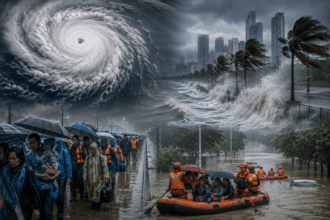
Beyond the wind, there’s the water. A warmer atmosphere holds more moisture—about 7% more for every degree Celsius of warming. This doesn’t just mean more rain; it means the storms dump that rain in concentrated, devastating bursts. Coastal cities are now facing a double threat: higher baseline sea levels from melting ice caps and more aggressive storm surges pushed ashore by stronger winds.
“The physics is straightforward,” says one climate scientist familiar with recent atmospheric modeling. “You give a storm more heat and more water vapor, and it will produce more rain and higher winds. It isn’t a theory anymore; it’s an observation.”
While the total number of storms per year hasn’t necessarily spiked, the proportion of storms reaching Category 4 or 5 status is rising. These “major” hurricanes are becoming the new baseline, forcing meteorologists to rethink everything from evacuation timelines to building codes.
The era of predictable, seasonal storms is ending. We are now navigating a period where the ocean’s rising fever is turning routine weather systems into record-breaking disasters, leaving little room for error in how we prepare for what comes next.